

Who really bears the costs and risks of modern medicine?
In this new essay, I argue that the pharmaceutical industry’s greatest innovation may not be biomedical at all. Rather, it may be institutional.
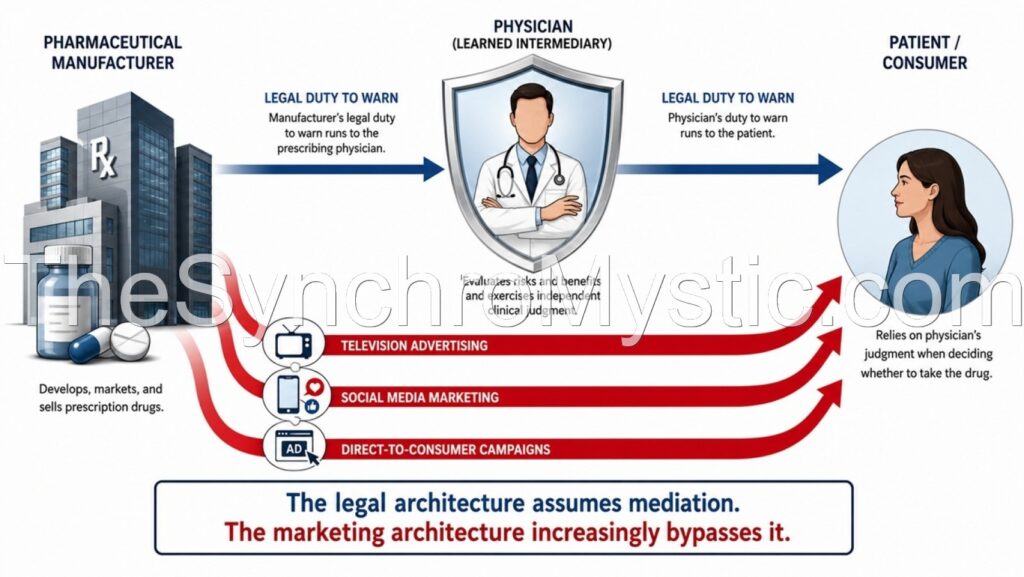
Drawing upon legal history, public-choice economics, critical theory, and political economy, I trace how research costs, testing risks, malpractice exposure, and legal liability are systematically redistributed away from manufacturers and onto taxpayers, physicians, and patients.
Topics include the Bayh-Dole Act, off-label prescribing, the learned intermediary doctrine, regulatory capture, direct-to-consumer advertising, and the broader logic of instrumental rationality.
Whether one ultimately agrees or disagrees with the thesis, the resulting picture raises profound questions about how modern institutions distribute risk, responsibility, and reward.
Read the full essay on Substack. (Companion video is forthcoming.)