Eyes Wide Shut, Jeffrey Epstein, and the Secret Society Hiding in Plain Sight
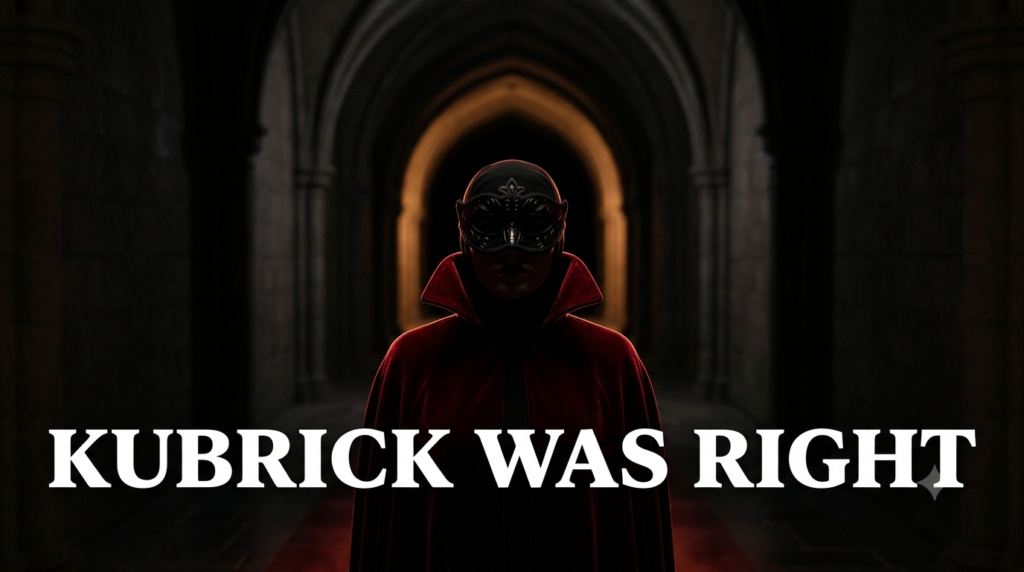
What if Stanley Kubrick’s final film wasn’t predicting Jeffrey Epstein—but revealing the kind of world that makes an Epstein possible?
In this new SynchroMystique™ video essay, we compare Eyes Wide Shut and the Epstein affair through the lens of Jungian synchronicity, symbolic pattern recognition, and cultural archetypes. Rather than advancing sensational claims, the presentation explores striking structural parallels involving secrecy, elite social networks, ritualized behavior, mutual compromise, and the insulation of concentrated power.
The result is less an investigation into any single individual than a meditation on recurring historical patterns—and why Kubrick’s final masterpiece seems increasingly prophetic in hindsight.
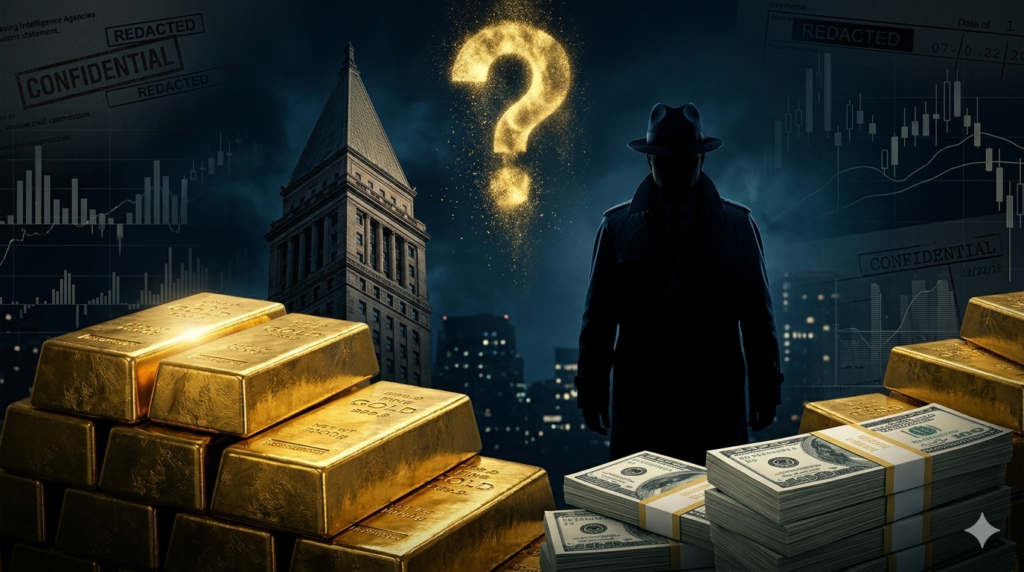
What happens when one forgotten Wall Street institution appears at the crossroads of finance, intelligence, political symbolism, esoteric history, and more than one of the most controversial episodes in modern America?
This investigation traces the remarkable history of Bankers Trust — from its origins within the J. P. Morgan financial network and its rôle in the rise of the Federal Reserve, through its pyramid-crowned headquarters at 14 Wall Street, to its later acquisition of Alex. Brown and eventual absorption into Deutsche Bank.
Along the way, unexpected connections emerge: Nicholas Roerich’s mysterious “wandering stone,” Henry Wallace’s fascination with esoteric symbolism, the appearance of the reverse Great Seal on the dollar bill, CIA executive Alvin Bernard A. B. “Buzzy” Krongard’s ties to Bankers Trust-Alex. Brown, the unresolved questions surrounding pre-9/11 options trading, and the destruction of the Deutsche Bank Building beside the World Trade Center.
Rather than arguing for a grand conspiracy per se, we examine the dense network of (documented) historical relationships through our usual pattern-detecting lenses of symbolism and Jungian synchronicity.
But, whether viewed as a patchwork of coincidence, an exploration in psychogeography or archetypal recurrence, or (indeed) bona-fide evidence of deeper historical forces, the story of Bankers Trust offers a striking case study in the strange ways power, symbolism, finance, and myth can intersect.
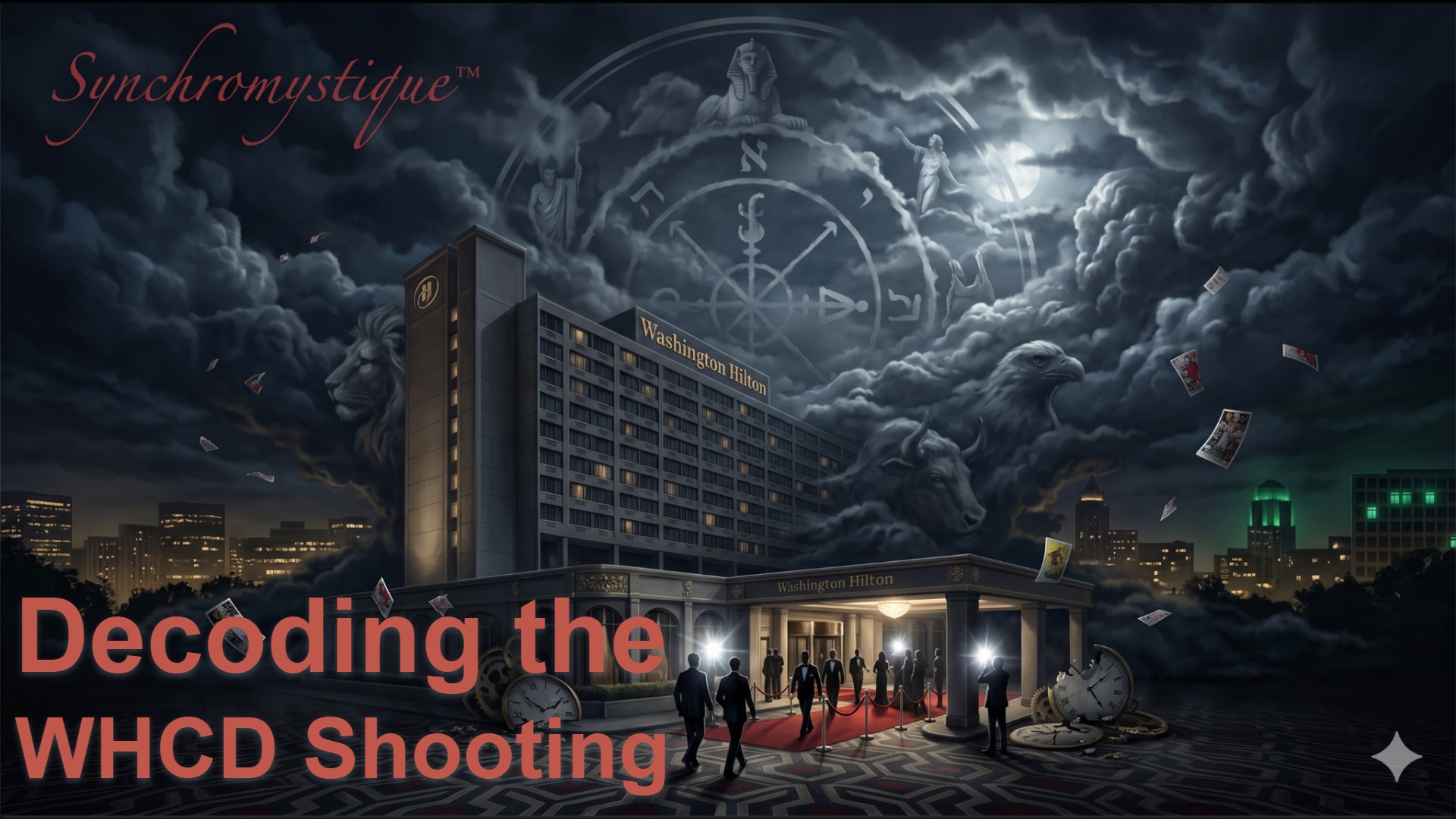
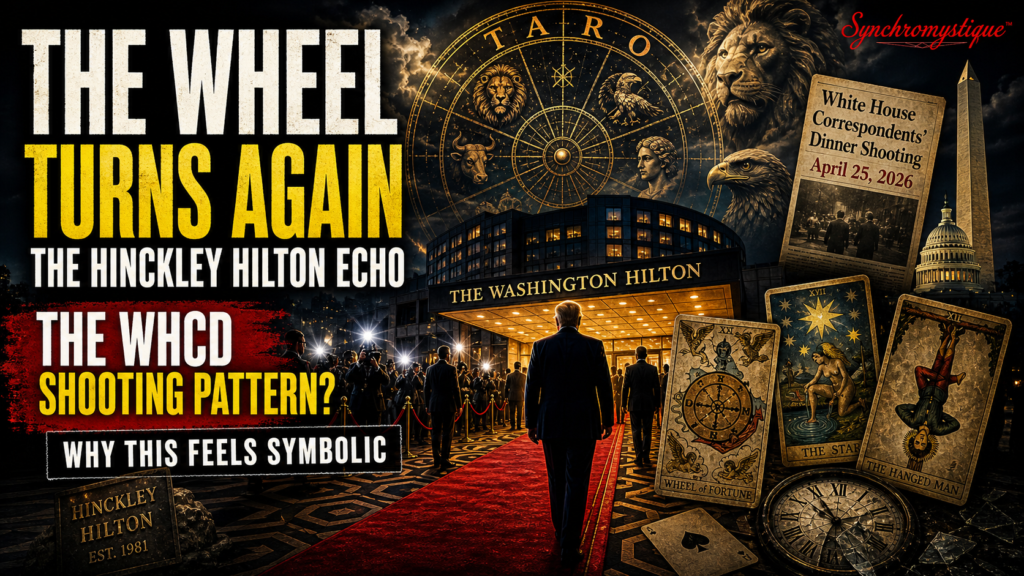
On April 25, 2026, violence disrupted the White House Correspondents’ Dinner at the Washington Hilton — a venue forever linked to the 1981 Reagan assassination attempt.
In this new investigation from The SynchroMystic, we explore the symbolic, historical, and esoteric dimensions surrounding the event.
From Tarot archetypes and ritual calendars to “Wheel of Fortune” recurrence patterns, Oz symbolism, political mythology, gematria claims, and the uncanny return to the “Hinckley Hilton,” this article examines how modern events become layered with symbolic meaning — whether intentionally or unconsciously.
Rather than making accusations, this presentation catalogs the synchronicities, symbolic echoes, historical parallels, and mythic patterns that observers have identified in the wake of the shooting.
If recurring symbolism, political ritual, occult interpretation, and cultural mythmaking interest you, this may be one of the most layered analyses yet.
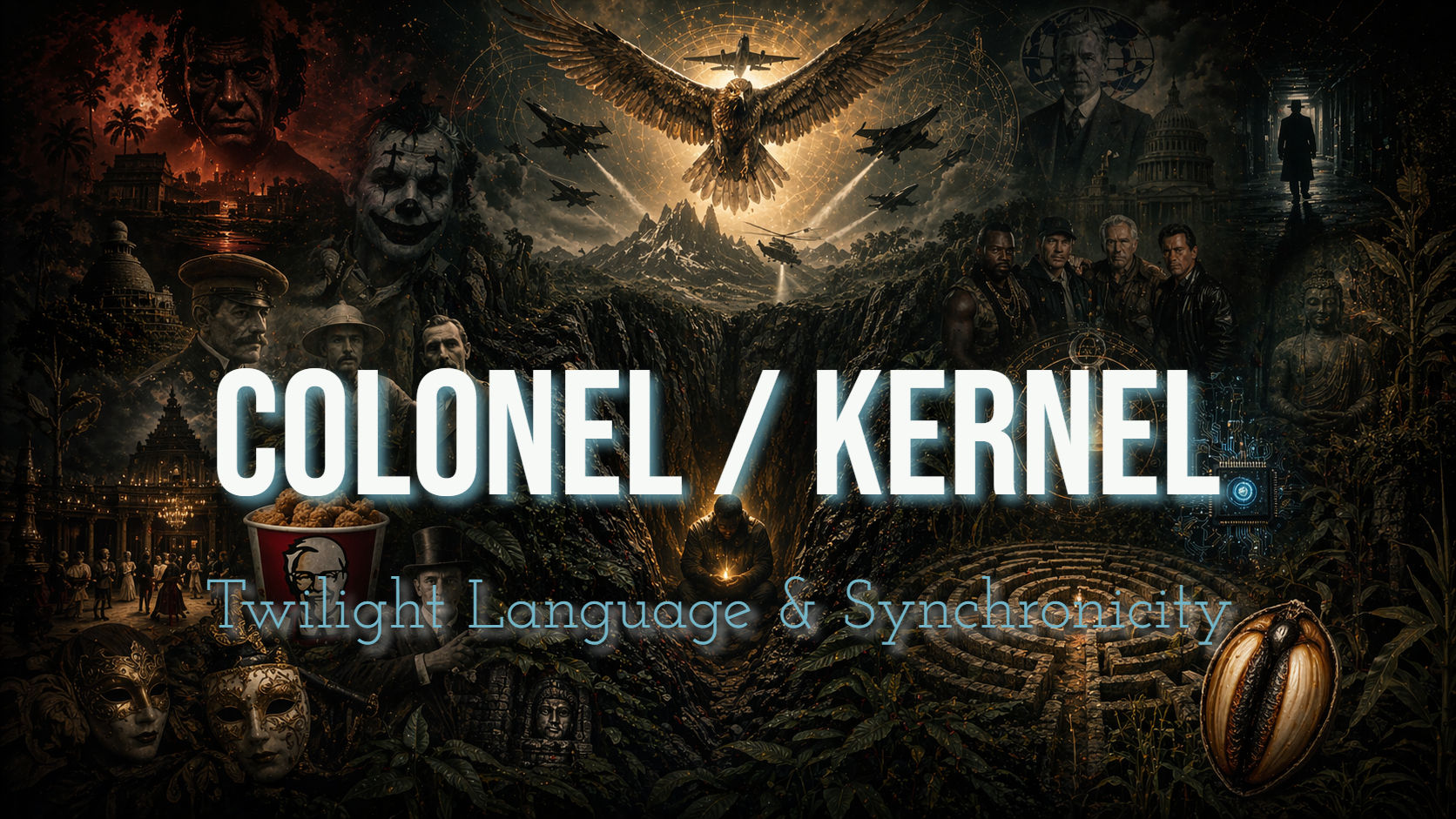
A widely circulated 2026 military rescue story — featuring a stranded “full-bird colonel” hiding in a mountain crevice — serves as the launching point for a deeper symbolic investigation.
This article/video — the latest in our ongoing Synchromystique™ project — explores the word “Colonel” as an archetypal mask appearing across history, fiction, and culture, from Colonels Kurtz (Apocalypse Now) and Cathcart (Catch-22) to Colonel Sanders (yeah, that’s KFC) and beyond. Through a lenses of Jungian syncrhonicity and Hoffmanian “Twilight Language,” the piece identifies a recurring pattern: the Colonel archetype serves to project of authority, identity, and persona.
But our inquiry goes further.
Because, when spoken, “colonel” shifts (sometimes imperceptibly) into “kernel” — the seed, the core, or the hidden center.
The modern rescue narrative becomes emblematic: authority stripped down to survival, rank reduced to signal, the mask collapsing into essence. The “Colonel in the crevice” becomes a living metaphor for descent, concealment, and rebirth. Curious timing for Springtime and Easter, wouldn’t you say?
This is not conventional analysis — it is symbolic cartography.
👉 Read the full article on Substack
COLONEL / KERNEL: by Matthew J Bell
A Synchromystical Meditation on Titles, Masks, & Seeds
(See the video version of this presentation on YouTube.)
Omicron Lexicology
In May of 2021, when the World Health Organization, or WHO, announced novel naming conventions for the equally novel coronavirus, we were launched headlong into “onamastics,” a field of study that falls under the heading of lexicology, and that Fortean “blogger” Loren Coleman has dubbed “name games.”
In the WHO’s new vocabulary, mutated versions of the original pathogen, called “variants,” will, in the foreseeable future, be designated by letters of the Greek alphabet.
Until the end of October of 2021, the most prominent of these variants was “Delta,” about which letter we will have more to say in a moment.
But, in November, the world was introduced to “Omicron,” which word – itself – means “little ‘o’.” And stands in contrast to the more familiar letter “Omega,” or “great ‘o’.”
To confuse matters, we must also consider the “o-macron,” where “macron” means “long” or “big,” and which appears with a straight bar over the letter.
As Twilight-Language expert Michael Hoffman has publicized, and as a visit to the appropriate entry on Wiktionary.com will confirm, “omicron” has a pair of provocative anagrams.
Although it is possible to imagine percipients rearranging these themselves – whether consciously or subconsciously, I’m a bit dubious about the reliability (or impact) of this.
However, it is beyond doubt that various media outlets have drawn deliberate attention to some of these recombinations – and this exercise sets these anagrammatic possibilities before our minds.
For instance, there’s a widely publicized anagram spelling the word “moronic,” which fits into a broad fool-related symbol pattern that I will touch on here, but further develop in a subsequent video (already in production).
Or again, the letters of “omicron” can be rearranged to create the obscure word “oncomir,” a terminus technicus (it turns out) in genetic medicine.
Straining for credible associations, one might think back to the so-called “Oncomouse,” a rodent mutated for the express purpose of growing cancerous tumors, ostensibly for experimental purposes.
Patents on the little monster were, for a time, the exclusive province of the corporation that, at the time, was known as E. I. DuPont de Nemours & Co., or just DuPont, for short – a company that will crop up again in part two of this study.
At present, it’s striking that some of the same oncological and genetic key words recur in articles about the coronavirus.
Also of interest is the fact that word “omicron” can be broken down into the names “Omi” and “Cron” which, as this Hoffman Wire points out, summon the specters of two heathen gods, Odin — recently featured as a character in various installments of the so-called Marvel Cinematic universe — and Cronus.
In Greek mythology, Cronus was the pre-Olympian god who castrated and deposed his father, Uranus, resulting in a separation of heaven and earth, only to be dethroned by his son, Zeus.
If you think that this association is far-fetched, I direct your attention to this New York Post headline that unmistakably links the word “omicron” with ideas of deity.
And this provides a segue to a deeper level of analysis. I believe that, when one looks, one finds a Saturnian undercurrent to recent events.
Saturn, of course, is the Roman version of Cronus.
But, before we venture too far down this road, we must address an apparent difficulty. Numerous online sources are at pains to disassociate or otherwise distinguish Cronus/Saturn from Chronos, otherwise known as the god of time.
It is frequently claimed that it is erroneous to identify Cronus and Chronos.
However, whether an errant “confusion” or a justified equation, the fact is, there is ample reason to consider the Greco-Roman Titan to be part of the same symbol set as the figure sometimes designated “Father Time.”
For an obvious reason, we turn to one of America’s so-called “newspapers of record,” the vaunted New York Times, remarks: “…Saturn’s Greek name, Kronos, and the Greek for ‘time,’ Chronos, are nearly identical.”[1]
For a more august source, take a look at the 1st-to-2nd-c. historian and philosopher Plutarch, who asserted: “Cronus is …a figurative name for …Time” – at least, according to a passage in the possibly pseudepigraphal Moralia.
Moreover, the anonymous ancient authority known only “Pseudo-Clementine,” writing sometime around the third century A.D. – give or take a hundred years – declared: “…Chronos, who is Saturn, is allegorically time…”.
To quote the New York Times again: “The myth of Saturn …became an allegory of time: …he devours his children because time also destroys whatever it creates.”[2]
Even Wikipedia can be summoned to the effect that interpreting Cronus a “personification of time” was commonplace in antiquity.
Furthermore, the mammoth Dictionary of Ancient Deities, published by the prestigious Oxford University Press, lists “Chronos” and “Saturn” as aliases for Cronus, regarding these – with all their variant spellings – as synonyms for that deity who is both “God of the World” and “God of Time.”
Incidentally, the phrase “god of the world” appears reflected in the Bible, with 2 Corinthians (chapter 4, verse 4): informing us that “the god of this world” blinds unbelievers.
And an allied concept is picked up by curious late-19th/early 20th-century French thinker, René Guénon whose book “The King” or “The Lord of the World” (transl. of Le Roi du monde),[3] first printed in 1927, is an extended investigation of, and meditation upon, the legendary realm of Agartha.
Suffice it to say that, for purposes of this present symbol odyssey anyway, we will echo the succinct statement of the online mythology encyclopedia, Theoi.com: “Kronos was essentially the same as …Chronos …, the primordial god of time…”.
This association is not trivial. For one thing, some mystery religions, such as Mithraism, placed Chronos at the pinnacle of their often vast and multifarious pantheons. So, he was a pretty important guy.
But, also, the connection ramifies the Saturnian leitmotif – which, to borrow a phrase from the Gospel According to Luke (chapter 21, verse 25), includes “signs” in the heavens.
Who remembers the so-called “Great Conjunction” at the end of 2020?
This rare astronomical event involved the perceived alignment of Jupiter and Saturn. And, despite Saturn’s often dark interpretive profile, was referred to as the “Christmas Star” by some media outlets.
To emphasize the singular nature of this celestial state of affairs, the National Aeronautics and Space Administration, or NASA, underscored the fact that such a close approach of the two largest planets in our solar system hadn’t occurred since the publication of William Shakespeare’s First Folio in 1623 and hadn’t been visible since the Catholic crusade against the Albigensians was carried out in 1226.
With one crucial exception, press descriptions of the 2020 “Christmas Star” were reminiscent of a presentation, titled The Star of Bethlehem, and put on by one Rick Larson, which made the rounds in churches around 2007. The conspicuous difference was that, in Larson’s hypothesis, the original star said to have heralded the birth of Jesus Christ, involved a conjunction of Jupiter with Venus, as opposed to Saturn. And this substitution changes the meaning, astrologically speaking.
Is this Saturnine “Christmas star” announcing the birth of something? Hold that thought.
For, in the discipline known as mundane astrology, Jupiter-Saturn conjunctions are regarded as presaging widespread changes in “society …as a whole.”
And, wouldn’t you know it, supposedly astrology is experiencing a surge in popularity unprecedented since the 1970s.
The British Broadcasting Corporation, this boosted prestige is explicable in virtue of a search for guidance and meaning in the midst of a seemingly never-ending pandemic, and in the wake of explosive bursts of populism – e.g., as seen in Brexit and the presidency of Donald Trump.
Whatever the merits or demerits of this ancient subject, the full story story behind increasing demand for the drawing up of horoscopes and related services cannot be told without mention of some of the sociological stage managers operating largely unseen, behind the scenes.
We read that, supposedly, “[t]he year 2020 was a topic of anxious speculation in the astrology community long before Covid-19 became a household word.”
The sympathetic article explains that astrologers interpreted rare conjunctions of Saturn and Pluto and the aforementioned conjunction of Saturn and Jupiter as harbingers of “trauma and transformation”. Is this paragraph to be found on Oprah Winfrey’s website? Or is it embedded in a sales pitch for some astrology “app,” like Co-Star or Sanctuary?
As a matter of fact, it’s an excerpt from an analysis by Dr. Omi Elisha, professor of anthropology at the City University of New York.
Elisha’s “think piece” was posted by the non-profit Social Science Research Council, or SSRC, and is presumably written for academic specialists and industry insiders. But…in what area or field? Just who and what is the SSRC?
Founded in 1923, the SSRC was apparently funded by a veritable A-list of ostensibly philanthropic organizations such as the Carnegie Corporation as well as the Ford, Laura Spelman Rockefeller, Rockefeller, and Russell Sage Foundations. It’s records are housed in the Rockefeller Archive Center in Westchester County, just northeast of New York City.
Dr. Alondra Nelson, who concluded her stint as SSRC president in 2021, is billed as “[a]n acclaimed sociologist” who has past associations with Princeton University’s esteemed Institute for Advanced Study in New jersey.
And I would be remiss if I forgot to mention that she currently serves as Deputy Science Chief to President Joe Biden. So, it seems safe to say that the SSRC does not lack establishment connexions. But, what does it do?
To begin to sketch an answer that question, let’s look briefly at two important figures from the SSRC’s past: Charles Merriam and Harold Laswell.
Merriam was known for combining behavioral psychology with political science.
He sought to create “…a manipulative science that could alter social structure…”.
In case viewers are unaware, the use of “psychological manipulations” aimed at “influencing …opinions and actions” is one of the basic definitions of “propaganda” given by the important 20th-c. French theorist Jacques Ellul. So…the SSRC was essentially founded by professional propagandists.
According to the late political philosopher Sir Bernard Crick, Merriam and his cohorts – such as Lasswell – particularly focused on the creation of propaganda that was characterized by “…the manipulative use of ‘symbols,’ ‘slogans’ and ‘key-words’…”.
Lasswell himself explicitly stated that such a symbolical manipulation of the public was the means by which “…elites …may …be attacked or defended”.
To put it slightly differently, Lasswell believed that “[t]he elite preserves its ascendancy…”, in part, “…by manipulating symbols…”.
Far from being a dead letter, something of this same sentiment was recently articulated by The Matrix Resurrections director, Lana Wachowski, when she stated that “technology …[has t]he power …to trap or limit our subjective reality…”.
That money elites have a deep, abiding academic and economic interest in propaganda and symbolism should be kept firmly in mind when we discover, for instance, that the current wave of COVID has the same name as an obscure, 1963 Italian sci-fi “flick” about a body-invading alien bent on world domination.
This is especially so since it is an open secret that government information brokers and psychological-warfare operators, not least of which include the U.S. Central Intelligence Agency, have – for years – had an entrée into so-called “show business.”
Likewise, discovering “omicron” references in video games should scarcely surprise us, for similar reasons.
Namely, there has arguably been a CIA/video-game-company pipeline since (at least) the mid-1990s.
Of course, the cover story is that such a connexion is merely the “entertainment industry” equivalent of former athletes being enlisted as broadcasters for their “color commentary.”
Those who have a bit more familiarity with the history of “psych war” may be forgiven if they are unable to suppress a chuckle.
But unusual and symbolical references are hardly limited to amusements and diversions.
Would you believe that some cases of COVID secondary infection have a physiological presentation dubbed “Rings of Saturn”?
Let us turn, for a moment anyway, from these odds and ends, to a more significant image – the visage of the man nominated “…the public face of the Capitol Riot.”
His semi-nude appearance and horned head reminds this observer of the wild and woolly “fertility spirits” and companions of the god Pan that are known as Satyrs.
Apparently, you don’t need too much assistance locating these fantastic beasts, as they are part of a cluster of mythic figures who are “…not difficult to catch…”…
…as this particular specimen discovered shortly after his odd photo session on Capitol Hill.
Among the myriad remarkable features of this quasi-Satyr, especially in light of the Greek-flavored alphabet soup served up by the doctors at WHO, is the tattoo emblazoned over his left pectoral muscle.
Per a hyperbole-laced article on theconversation.com, the symbol in question – a “Valknut” – is Nordic in origin, and therefore linked to the previously mentioned Odin. But, in any case, consists of a trio of mutually interlocking deltas – which word is, of course, the name of another prominent member of the COVID variety pack.
The triangle-shaped delta occurs in the symbology of Freemasonry, where it frequently is represented with an eye in its center.
Weirdly, as the VigilantCitizen.com noticed, the Greek letter “omicron” developed out of earlier alphabetic characters – such as the Semitic ayin, found in Arabic, Aramaic, Hebrew, Phoenician, and Syriac – that were originally modeled after the human eye. What a coinkydink.
Some sources claim that the Omicron variant may have “unusual symptoms” that may include “…sore eyes.”[4]
Additionally, the triangle/delta, a supreme Masonic symbol of deity (according to widely cited authority Albert Mackey), is usually drawn emanating various “rays” that are known as a “glory.”
As discussed in our previous video, another name for a “glory” is a corona.
Before we move off of the delta, we shouldn’t forget that at least some of those involved in the events of January 6, 2020 – which will be examined more in depth in part two – would have marched from the Trump rally to the Capitol along the hypotenuse of what is called in Washington D.C. “Federal Triangle.”
In Masonic lore, the hypotenuse of the Pythagorean triangle stands for the issue of a “sacred marriage,” or hieros gamos, between the divine masculine and the divine feminine.
Believe it or not, the symbolism of the Pythagorean triangle isn’t the only sexualized element of this whole sordid affair. First of all, we should note that, according to The Ashgate Encyclopedia of Literary and Cinematic Monsters,[5] not only “Saturn” and “satyr” cognates, they also both derive from the Greek word for the male reproductive organ.
Ancient natural historian Pliny the Elder concurs on the point, saying that the word “satyr” is the namesake of the membrum virile on account of their proclivity toward lust.
This is likely one reason why satyrs are sometimes depicted ithyphallically.
This would all perhaps be an irrelevance, presently, were it not for a bizarre fact.
The Federal Bureau of Investigation entered into evidence, in an official court filing, a photoshopped image featuring the QAnon Shaman adjacent to a lewd picture of a man. Officially, there was no suggestion that the FBI had created the so-called “meme” – merely that some unwitting agent had included it by accident.
As noted in passing already, satyrs are also associated with faun-like god, Pan.
This lusty figure lends his name to the terror-stricken frame of mind termed panic an all-too-familiar modifier in our era of around-the-clock COVID media coverage.
Oh… recall when we asked about whether the “great” Saturn-Jupiter conjunction should be read as a birth announcement? Consider that Arthur Machen, the 19th-20th-c. Welsh horror novelist wrote a book called “The Great God Pan.” The plot?
Well… let’s just say that it appears to have been one of the principal forerunners – not to say inspirations – for Ira Levin’s 1967 book, Rosemary’s Baby, which was made into a movie the following year by Polish-born filmmaker Roman Polanski.
It is not for nothing that the proprietors of tarot.com bid readers to take note of “…the similarity between the words ‘Saturn’ and ‘Satan’…”.
This connexion is also drawn by Aleister Crowley’s protégé, Kenneth Grant, who links Saturn – and his emasculating sickle – with Satan, Shaitan, and Set.
Yet a further peculiarity stems from the QAnon Shaman’s real name – which, by the way, is prone to vary from article to article. He is sometimes called “Jake Angeli.” At other times, his surname is given as Chansley. And I seem to recall once reading that it was “Angeli Chansley.”
The Online Etymology Dictionary starts us off by registering the idea, dated from 1854, that “Jake” is “…the typical name of a rustic lout,” or country bumpkin.
But, the really juicy tidbit lies in the more usual observation that Jacob means “supplanter.”
Or to be technical, the meaning is sometimes given by the phrase “he takes by the heel” or “he cheats.”
Again, we may turn to the Bible for insight. In the Book of Genesis (chapter 27, verse 36), we read that Esau – son of Isaac and grandson of Abraham – lamenting the theft, by his own brother, of his birthright, exclaims: “Is he not rightly named Jacob? For he has cheated me…”.
What intrigues me, here, can be gleaned from the offbeat, seventeenth-century treatise Daemonologia Sacra, written by marginal English minister named Richard Gilpin.
Gilpin makes the incisive remark that “…we may say of [Satan]” what “Esau said of Jacob”: they’re both supplanters!
Indeed, Cronus-Saturn was a supplanter, too. After all, he overthrew his father, Uranus, until he was himself overthrown by Zeus-Jupiter.
So, right at center stage, and in the midst of all these Saturnian/Satanic references, we’re presented with a burly character whose name translates to “supplanting angel.”
But, if Angeli is playing a Saturnian role, then where is his sickle?
Arguably, there’s been no more prominent face, lately, than that of Anthony Fauci. He’s dominating the news cycle.
The reason for his celebrity owes to his dual position as director of the National Institute of Allergy and Infectious Diseases and Chief Medical Advisor to the President.
According to the Oxford University’s Dictionary of American Family Names, the surname “Fauci” means, well… Have you guessed it?
Fauci means “sickle.”
Omicron Numerology
But there’s a numerological aspect to all this as well. And, as usual, it’s multifaceted.
For starters, as with Hebrew, Latin, and some other languages, Greek characters lead a double life as both letters and numerals.
Viewers will observe that, considered as a cardinal or “counting” number, omicron is assigned a value of 70. It may be passing interest, therefore, that news reports of late have been seasoned with references to 70s.
For example, until a retraction was issued, we were told that the omicron variant accounted for around 70% of COVID cases (at least, in California).
Omicron supposedly “multiplies 70 times faster than Delta.”
At the same time, it’s around 70% less severe.
Omicron – or a variant cousin – seems to have afflicted 70 medics at one Christmas party.
And one community is summoning an equivalent number of national guard persons to address the associated “surge.”
Or again, guess how many cruise liners have allegedly been “hit by COVID”.
Or, here’s one: what percentage of “immunization coverage” is the WHO aiming at by mid-2022?
If you need a hint, it’s the same name that keeps showing up in reports about January 6, 2020, concerning arrests, guilty pleas, and sentencing.
Even the total (if preposterously large) number of “…Riot …Defendants” is a multiple of 70.
And, coincidentally, it’s also the number of military-connected participants to the so-called “Capitol Insurrection.”
As well as the number of officers who have resigned or otherwise “left the Capitol Police since the January 6 Riot.” Again, stay tuned for the second part of this study where I will be preoccupied with the symbolism specifically surrounding January 6.
But 70 isn’t the only numerical value of interest. For Saturn – by way of it’s 3×3 “magic square” – has a magnetic relationship with the number 15. You will see that every column, diagonal, and row in the diagram sums to 15.
So, I was unsurprised to read that 15% of arrestees have been denied bail.
Or that Omicron was – at the time of writing – found in 15 U.S. States.
And seeing that Jake Angeli was sentenced to a total of 51 months in prison, you will note that “51” is merely “15” with the digits transposed.
To be strictly accurate, Angeli-Chansley’s ultimate sentence was 41 months – though it was unclear to me whether he was given a reduced prison sentence, or whether he was simply given credit for the 10+ months of time he had already served.
Be that as it may, one of the major components of occult theory and practice is the Tarot. So, it is always worth a look to see if there is some relevant correspondence, particularly to the so-called “Trump” cards. In this case, card XV – labeled “The Devil” in both the Rider-Waite and Crowley decks – caught my attention.
According to Aleister Crowley, the 19th-century magus Éliphas Lévi “…[identified The Devil card] with Baphomet, the ass-headed idol of the Knights of the Temple,” also known as the Knights Templar.[6]
Crowley goes on to remark that the “…card …[also] refers to Capricornus in the Zodiac.”[7]
This association is made fairly obvious in Crowley’s version of the card. He adds that: “ …The sign is ruled by Saturn… [And t]he card represents Pan Pangenetor, the All-Begetter.”[8]
It should be noted that Crowley explicitly equates Saturn with the Egyptian god Set as well as with the Islamic Shaitan and Satan.[9]
Crowley concludes his fascinating analysis of the fifteenth Tarot Trump by drawing one final reference to Pan and connecting “The Devil” symbol “…to the letter ’Ayin, which means an Eye.”[10]
And… with that, we come full circle, so to speak, back to the “omicron” which letter, you will recall, also derived from ’Ayin.
We arrive, also, at what is perhaps the most crucial numerological correspondence.
As Edward Burger writes, in the “The Power of Zero,” “[I]n the 2nd century CE, Ptolemy used the Greek letter omicron, which looks like an ‘O,’ to denote ‘nothing.’ So, this is the symbol for zero, the ‘o’ that we see – the circle.”[11]
In other words, one – contested – hypothesis has it that omicron was used since the Greek word for “nothing” started with that letter. Speaking of “nothing,” I seem to recollect seeing that word somewhere.
Oh yes, I remember! Nothing is what we’ll soon own, according to the World Economic Forum. But…we’ll “…be happy.”
It’s part and parcel of the “Great Reset,” of course.
Announced in June of 2020, “The Great Reset” was the “theme” of what the World-Economic-Forum press release termed “a unique twin summit.”
Which also happened to be the 51st meeting of Davos men and women.
The face and founder of World Economic Forum is the dour-looking German-born engineer, Klaus Schwab.
But the Great-Reset initiative was jointly announced by Schwab in conjunction with Britain’s Prince Charles, the Secretary General of the U.N., and the head of the International Monetary Fund.
And it is being undertaken with financial titans from Asia, Europe, and North America – including British Petroleum, Mastercard, and Microsoft.
Subsequently, the phraseology was echoed by other heavy hitters, such as venture capitalist Peter Thiel, author of the book Zero to One.
It’s intriguing to note that one of the primary definitions for the word “reset” is to set back to a zero state.
It seems that “zero” is a buzz word and choice title for numerous projects and schemes, of late.
Does its relation to the “Great Reset” have to do with its mathematical reputation as the “Great Equalizer”?
Any other number, when multiplied by zero, produces zero as a result; and any other number raised to the power of zero becomes 1. On the other hand, adding or subtracting zero has no effect.
In a way, zero’s equalizing properties are inescapable.
By the way, the U.S. Army doctor thinks that, in a similar way, “there’s no way” to escape the Omicron variant – “the whole world will be vaccinated or …infected” (or perhaps both).
But we may not need armchair speculation about the significance of the “Great Reset.” For 2021 had been declare “A New ‘Year Zero’” by the same Klaus Schwab whose expressionless visage we just saw.
Schwab is self-consciously drawing a line to the “Year Zero,” or “Zero Hour,” that began in 1945 with the “de-Nazification” of Germany.
According to the relevant Wikipedia article, “Zero Hour” is a synonym for “radical new beginnings” and the eradication of “old traditions.”
And the World Economic Forum program isn’t the only one that is preoccupied with zero-related symbolism.
Environmentalism and “climate-change” doomsayers are as well, as exemplified in this video production from 2019.
In fact, “Net Zero” has become the stated goal of those who wish to eliminate carbon emissions.
Among “net-zero” enthusiasts is former Microsoft chieftain, Bill Gates, who revealed in September of 2021 that he was “launching his own news publication” name “Cipher,” which derives from an old Arabic word for zero.
Symbolically, sifra basically designates a consul, satrap, or viceroy whose authority is delegated to him by the true sovereign.
Cognates abound, and seem to be popular choices for villain names, as evidenced by Le Chifre, in the 2006 remake of the James Bond movie, Casino Royale.
Or the traitorous, original Matrix character, Cypher, who expresses regret over having taken the red “truth pill,” and eventually favorably quotes the aphorism “ignorance is bliss.”
The English word “cipher” sometimes also referred to something expressed secretly, or in code.
This usage reflects the fact that the concept of zero emanates uncertainty another commonality with Omicron, a variant against which current vaccines provide “absolutely zilch” (i.e., zero) in terms of protection, according to immunologist’s lament, anyway.
As the late historian of the occult James Webb pointed out, “large outbreaks of unreason” often follow fast on the heels on societal catastrophes, such as the “crisis of Zero A.D.”
Notorious global consulting firm McKinsey, which helped construct the now ubiquitous, zebra-striped Universal Product Code, Omicron is ushering in a new “uncertain chapter” in the pandemic narrative.
Is this because of Omicron’s “uncertain origin”?
In Cartesian geometrical terms, of course, the origin is always 0,0.
And division by zero results in a quotient that is variously labeled as “infinity” or “undefined.”
All this is being presented as an ominous portent for the world and the global economy.
And this is despite the fact that, for many weeks, it was said that Omicron was responsible for “zero deaths.”
A claim that even the system-approved “fact checkers” at Snopes.com acknowledged was true.
Yet, the Federal Reserve Bank, known as “the Fed,” has kept interest rates hovering around zero.
You may recall that the initial rationale for the zero percent involved the Fed’s claim that such rock-bottom rates were required to avert market panic.
The word “panic,” of course, takes us back to the god Pan whose name signifies “all” – the exact opposite of nothing – and who may, or may not, be the most ancient of pagan deities. (Appropriately enough, Pan’s origins are uncertain.)
What about Mr. Jake Angeli, whose widely circulated Pan-lookalike images made him the spokesmodel for the Capitol Riot? Prior to January 6, he had “zero criminal history.”
Similarly, the 15-year-old Oxford High School shooter, Ethan Crumbley, had no prior disciplinary infractions before taking the lives of several of his classmates – one of whom was repeated pictured with large yellow-orange “zeroes” on his jacket.
It is of course vital to appreciate that, in English, the numeral zero and the letter “O” are often used interchangeably.
So much so that a popular 1990s television show, ostensibly the zip code for Beverly Hills, California, 90210, was pronounce “nine-oh-two-one-oh.”
Or again, consider the 2012 movie Zero Dark Thirty, which presented Hollywood’s version of the search for Osama bin Laden. In military jargon, the titular phrase would most often be heard as “oh dark thirty” – which could almost be the opening words of an occultically themed ode.
So, when you see the photograph of the unfortunate Tate Myre, remember that it makes virtually zerodifference whether the prominent patch on his “varsity jacket” is a numeral or the initial letter of “Oxford,” the visual impact is arguably the same.
Relatedly, the roundabout outside Oxford High School’s entrance discharges the same, zero-point energy, if I may take a little artistic license.
We were introduced to circular signs during the most recent presidential election cycle, as Joe Biden’s campaign logo featured four of them.
His design may itself have been a takeoff from the emblem previously used by Barack O-bama.
Turning away from circles, for a moment, let us recollect the campaign speech in which Hillary Clinton “…put half of Trump’s supporters into …the basket of deplorables.”
In light of the present study, this is interesting – not least because “deplorables,” in this context, refers to people who are regarded as uneducated, “worthless nobodies.”
Deplorables are people with “no importance or authority” at all – not even as ciphers.
As pointed out in the Handbook on Autoethnography, our familiar, zero/“O” shape would be a fitting shorthand for such people – partly as a throwback to Odysseus’s ploy to outwit the Cyclops in Homer’s epic The Odyssey.
In any case, “deplorables” are contemptuous, undistinguished zeros.
In the 2018 film Vice, Christian Bale portrays George W. Bush’s former V.P., in a stylized take on how Dick Cheney became – in the director’s estimation – one of most powerful autocrats in U.S. history from “…a big, fat, piss-soaked zee-roh” as actress Amy Adams memorably stated it.
The Penguin Dictionary of Symbols builds upon the observation that zeros have “no properties” of their own, by connecting this powerful numeral to “…the initiatory significance of the Fool in the Tarot pack.”
Also called “the Simpleton,” “…the Fool has no number.” Well…no positive number, anyway.
Viewers may wish to ponder a moment the fact, stated earlier, that one of “omicron’s” anagrams is a synonym for the word fool.
Self-proclaimed “libertarian” pundit Kristin Tate drew a direct parallel between “fools” and Clinton’s “deplorables” in her 2020 book, The Liberal Invasion of Red State America.
The cover art is provocative and suggests a possible link with the “Purple Revolution” concept attributed to Bank-of-England “breaker,” George Soros.
The World Economic Forum itself associates the “Great Reset” – or zeroing – with what it labels “the Fourth Industrial Revolution.”
And this probably won’t shock attentive observers, since the pervasive Saturnian symbolism has had revolutionary connotations since antiquity.
The Fool tarot card is variously designated “0” and “22.”
Which variance amounts to six of one and half dozen of the other, since – either way – the Fool is said to represent “…a return to zero, like [resetting] a meter…”.
Indeed, used as a verb, “zero” and “reset” are frequently intersubstitutable in the field of electronics.
And wouldn’t you know it? Who else stands for both “end and …beginning”? Why Saturn, of course.
Conclusion
Let’s take stock.
Explicit “time” references have been prominent parts of many recent news items.
Think back, once more, to Jacob Angeli Chansley, the man the media coronated the “QAnon Shaman.” Rolling Stone reports that Mr. Angeli is alleged to have written a note to Mike Pence, warning the then-vice president “it’s only a matter of time; justice is coming.”
For a slightly more sober-minded source, take a look at this tantalizing headline from Scientific American titled “Now Is the Time to Reestablish Reality.”
It includes a juicy quotation from our old friend Alondra Nelson, of Social Science Research Council fame, you might recall.
Nelson advises “Biden and his team” that, in order to sell the American public on “a sense of shared reality,” it is necessary to “reset the clock.” The full implications of this are a little, well… uncertain. But Dr. Nelson suggests that it would need to involve the use of “executive orders – likely building upon the Draconian edifice expanded by Dick Cheney.
In line with the SSRC’s raison d’etre, this chronological “zeroing” will involve “behind-the-scenes” “behavioral science” and a liberal dose of denigration for “conspiratorial delusions and paranoid thinking.”
“Science and Technology Now Sit in the Center…” Or, to be more precise, technocrats sit in the center, wearing white lab coats for “photo ops” brought to by their corporate sponsors.
As a final note, let’s consider Marxist-inspired “Critical Theorist,” Walter Benjamin.
In his 1940 essay, “Theses on the Philosophy of History,” otherwise known as “On the Concept of History,” Benjamin developed his notion of jetztzeit, or a “…time that is ripe” for revolution.
In Benjamin’s estimation, revolutionary upheaval is precipitated by a moment he calls Stillstellung, sometimes translated as “standstill.”
But the editors at Marxists.org preferred the phrase “zero-hour,” instead.
This “Zero-Hour” sparks a chain of events of supposedly “messianic” proportions and enables the stage-managers to exploit a “revolutionary chance” to reorganize the world.
But, alas, I see we’re out of time.
See part two for an in-depth look at the so-called 2020 “Capitol Insurrection,” including tie-ins to Victor Hugo’s 1831 novel The Hunchback of Notre Dame, the opening scene of which takes place during the joint celebration of Epiphany and the Feast of Fools, January 6, 1482.
***
Notes:
[1] Stephen Orgel, “Saturn’s Revolutions,” New York Times, Oct. 31, 1981, section 1, p. 27, <https://www.nytimes.com/1981/10/31/opinion/saturn-s-revolutions.html>.
The word “occult” simply means “hidden” or “secret.”1 Throughout history a number of people have dabbled – or specialized – in disciplines that are arguably characterizable as occultic (even if for different reasons).
For this list, I’m focusing on ten real-life figures who have sometimes been classified as “occultists.”
Some have been involved in the so-called “Hermetic arts” – alchemy, astrology, and magic – while others may be more correctly viewed as esoterics or mystics. One or two were apparently mixed up in practices that were a bit, well… darker.
There is no implication that the sometimes very different beliefs of these people are necessarily related. In other words, although some of these people may have interacted with one another and they bear sometimes interesting relationships, they were unique individuals and each entry stands on its own.
But, without further ado, here are my picks for the top 10 occultists who ever lived.
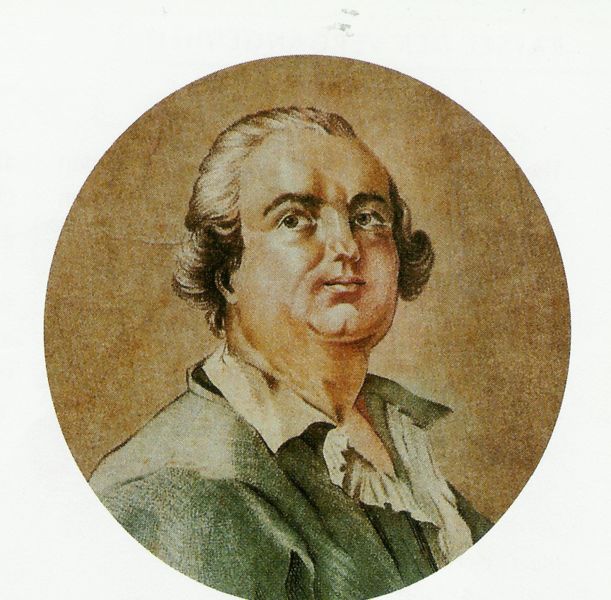
Supposedly born Giuseppe Balsamo in 1743 in Palermo, Italy, the man who would come to be known as “Cagliostro” was surrounded by controversy and mystery for most of his life.
He was praised by admirers as a powerful magician and mesmerist as fervently as he was denounced by detractors as a charlatan or infidel.
Cagliostro appeared on the scene in London in the momentous year 1776 – the same year the United States issued its Declaration of Independence from the British Empire, and the same year the ex-Jesuit Adam Weishaupt, under the name “Spartacus,” started the Bavarian Illuminati.
Cagliosto claimed to have been raised on the cryptopolitically significant Island of Malta – certainly a proverbial “hot spot” in arcane geography.2
And he said that he became a “Knight” in the Catholic religious Order of Malta – which traces its origins back to the crusading Knights Hospitaller, founded in the 11th century.
But, somehow, Cagliostri made his way to England, which island nation is occasionally referred to by the mystical name “Albion.”
Scattered and possibly unreliable reports suggest that he was subsequently “made” a Freemason, perhaps at the French Loge L’Esperance, then located in London.
Cagliostro himself claimed to be in possession of fantastic occult secrets – such as the formulas for the “Water of Life” and the so-called “Philosopher’s Stone” that had been the fabled goals of alchemy for hundreds of years.
He is noteworthy, in part, because of his introduction of a so-called “Egyptian Rite” into Freemasonry. Though, this association seems to have been more Kabbalistic than Egyptian.
“Kabbalah,” of course, is a stream of mystical and numerological tradition within the religion of Judaism, mainly associated with books such as the Bahir and the Zohar.
Cagliostro’s strange brand of masonry seems to have inspired later offshoots, such as the Rite of Memphis & Mizraim,3 which (in turn) may have motivated some urban planners in the U.S. to confer Egyptian-sounding names to cities like Memphis, Tennessee.4
Although Cagliostro held various odd jobs throughout his life, he is best remembered as something of a socialite who traveled across Europe (and possibly the Middle East) hobnobbing with royalty.
This pastime later created a few problems for him, however, as he was implicated (whether falsely or not) in a jewelry swindle involving French King Louis XVI’s wife, Marie Antoinette.
The event, called the “Affair of the Diamond Necklace,” was the subject of a 2001 Warner Brothers film,5 featuring Hilary Swank, Jonathan Pryce, and Christopher Walken as Count Cagliostro.
Historically, it was a major scandal and it increased popular resentment for the monarchy – feelings that paved the way to the bloody French Revolution – which some claim Cagliostro predicted.
The scandal was a factor in the growing resentment of the French people for the monarchy and helped lead to la révolution – which bloody event some claim Cagliostro predicted.
Imprisoned in the Bastille, he was eventually acquitted. But, shortly thereafter he ran afoul of the Catholic Church’s Roman Inquisition – which had earlier executed the 16th-century Dominican Hermetic philosopher Giordano Bruno and which should not be confused with the more notorious Spanish Inquisition run by Tomás de Torquemada at the behest of King Ferdinand and Queen Isabella.
Cagliostro is said by some to have died in the Castel Sant’Angelo while serving a sentence on heresy charges. Others maintain that he cracked the secret of immortality and effected a fantastic escape from his tormentors.
Either way, his memory was recently reinvigorated through his incorporation into the Marvel Cinematic Universe. Scott Derrickson’s 2016 movie, Dr. Strange, makes several mentions of a mysterious grimoire referred to in the film as the “Book of Cagliostro.”
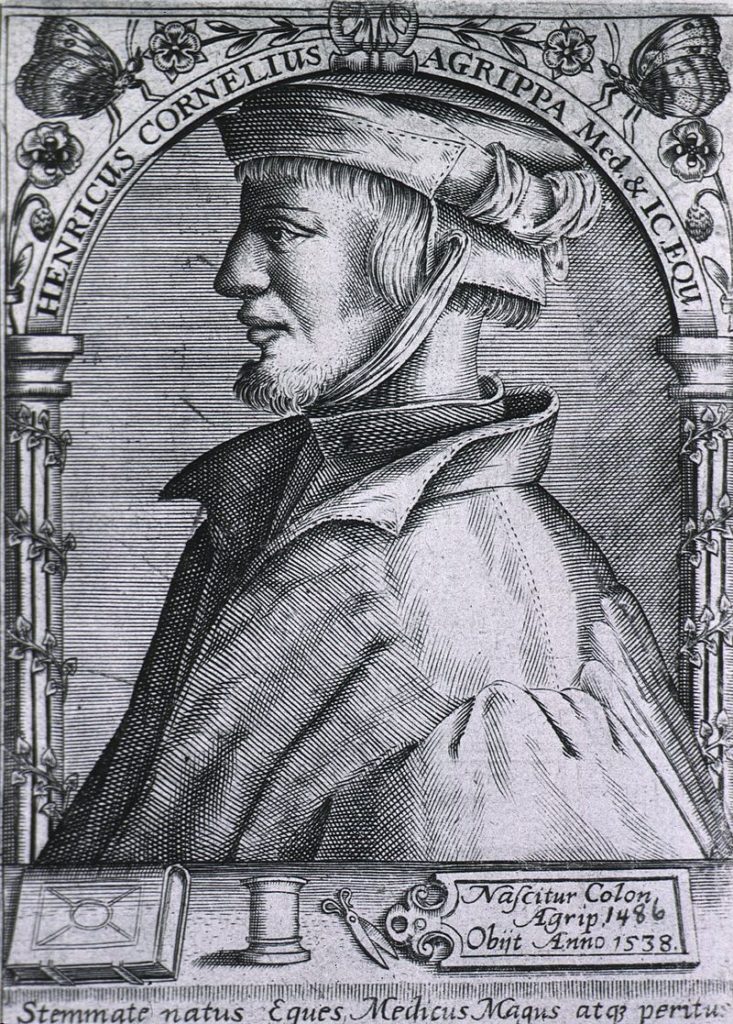
Born in 1486, Agrippa would become one of the most vilified occult philosophers of the Renaissance. He is frequently represented as having been a “black magician,” and depictions of him often include a black dog – his schwarzer pudel – which beast, in the lingo of witchcraft, was assumed to have been his “familiar spirit.”
“Familiar spirits,” of course, were entities – usually appearing as animals – who were believed really to be demons or other incorporeal beings who did the bidding of magicians and witches.
Ideologically, Agrippa fits broadly into a group of thinkers who lived at a time – after the fall of Byzantine Constantinople to the Ottoman Empire and after the expulsion of Jews and Muslims from Catholic Spain – when Catholic Europe was exposed to Greek Neo-Platonism and Jewish mysticism.6
A core group of Italians, including Marsilio Ficino, Pico dela Mirandola, and Francesco Giorgi, first began to combine these disparate traditions into a cohesive new system.
On the one hand, they were operating within the umbrella of Roman Christianity which, due to its Platonic heritage, already had some mysticism – particularly as expressed in Franciscan spirituality.
It also displayed a robust Christian “angelology,” or study of angels, inherited from the writings of Pseudo-Dionysus – especially in the books De Coelesti Hierarchia (“On the Celestial Hierarchy”).
These Italians then assumed some of the metaphysical framework of the ancient Neo-Platonists.7 To this, starting with Pico della Mirandola, they added elements of Spanish-Jewish Kabbalah.
The way toward this assimilation was partially paved by a growing interest in the languages of Greek and Hebrew8 – first by various religious orders, including the Cistercians, Dominicans, and the Franciscans mentioned a moment ago, and, later, by Renaissance Humanists, such as Petrarch, Macropedius, and Erasmus.
Into this “Christian Kabbalah,” Agrippa and others further mixed what they perceived to be the ancient Hermetic traditions of the legendary Hermes Trismegistus – in the form of the newly rediscovered and translated Corpus Hermeticum.
They believed that they were bumping up against a prisca theologia (that is, an “old theology”) – perhaps one that had been delivered to some of Biblical figures such as Enoch or Adam.
The aim was to reconcile all religious traditions and philosophies – including those that promoted the use of magic – a goal later adopted by H.P. Blavatsky.
For Agrippa, magic permeates the entire world, which he divided into three “realms”: the elemental world of earth, the sphere of planets and stars, and the “intellectual” plane of the divine.
Each division of the world has its own associated magic: “natural” or herbal magic at the terrestrial level; mathematical magic at the celestial level, and ceremonial magic at the super-celestial level.
The numerological character of some of this – as seen, for instance, in the use of magic squares – had a decided Pythagorean flavor, borrowed partly from fellow Kabbalist and occultist Johann Reuchlin.
Each of the cosmological levels is superintended by angelic entities – of varying degrees of power; and each type of magic has its own astrological correspondences – which exemplify the alchemical as-above/so-below maxim. Some of this this will be echoed by Aleister Crowley in the 20th century.
And this represents one of Agrippa’s most biggest contributions to what historian Frances Yates calls the “Hermetic-Cabalist tradition”: namely, Agrippa introduces alchemy into the mix.9
Yet, extraordinarily, Agrippa seems to have conceived of all this as a species of Christianity – chiefly because he recognized the name “Jesus” as the highest of the words of power.
Agrippa’s De Occulta Philosophia (“The Occult Philosophy”) was first printed in 1531 and would have a profound effect on later esoterics and would-be magicians – including those like Arthur Edward Waite who comprised the memberships of the Hermetic Order of the Golden Dawn.
Agrippa is memorialized with references in Christopher Marlowe’s play The Tragical History of Doctor Faustus (circa 1590), and in Mary Shelley’s Frankenstein (1818).
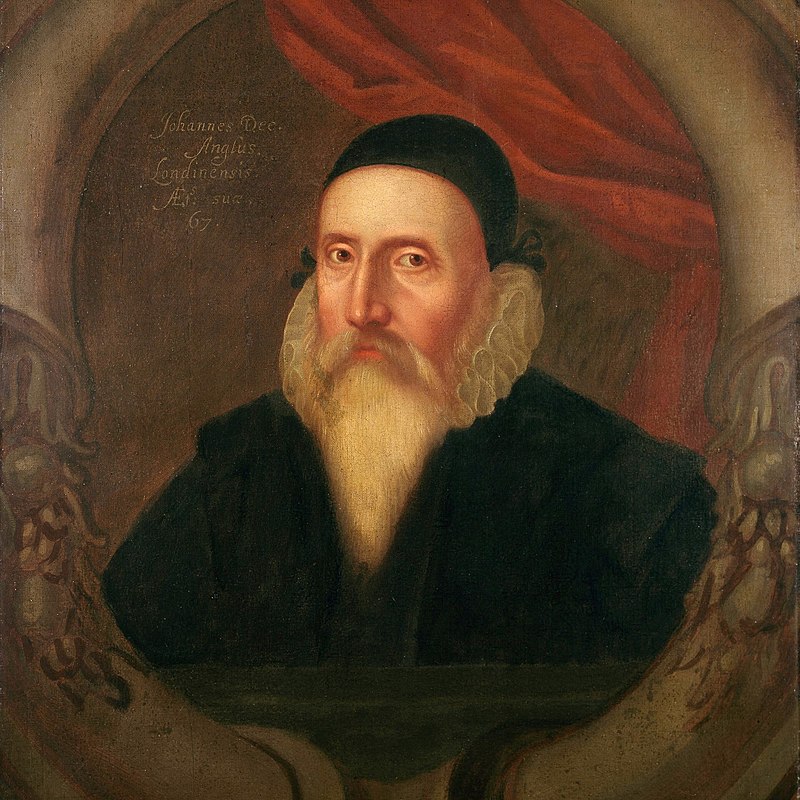
If Agrippa represented the migration of Italian occultism to Germany, John Dee represented its arrival in England.
Dee was born in the tumultuous 16th century, when the Reformation seesawed his country back and forth from Catholicism to Protestantism.10
During this time, partly in the capacity of a “royal astrologer,”11 he was variously in and out of favor with an assortment of well-to-do patrons, including some of the English monarchs of the period.
Widespread belief in his ability to produce or “cast” a horoscope made him a much-sought-after personality during this age of political intrigue.
However, this renown was a double-edged sword. John Dee would spend time in prison and, eventually, die in obscurity, because of his affiliations and views.
During his life, Dee worked closely with an alleged clairvoyant or medium named Edward Kelley.
Sounding a note from Agrippa, together, Dee and Kelley engaged in various alchemical experiments – including the attempt to create gold from base matter.
They also picked up on some of the early-medieval angelology12 and made various attempts at “scrying,” that is, they tried divination using a crystal ball or similar paraphernalia – such as Dee’s obsidian “spirit mirror.”13
But, Dee is mainly remembered as having been something of a sorcerous character. And, indeed, at one time or other he owned several “grimoires” – or books of spells – including the Book of Soyga,14 the Fourth Book of Occult Philosophy (falsely attributed to Agrippa),15 and the Sworn Book of Honorius.16
John Dee entertained socio-religious aspirations of a worldwide occultic-evangelical movement with Queen Elizabeth at the head – a view echoed by English poet Edmund Spenser in his epic The Faerie Queene (published around 1590).
Ostensibly to further this end, Dee visited Europe to spread his new “faith.”17
In any event, Dee and Kelley first met Polish King – and Transylvanian Prince – Stephen Báthory, uncle of the notorious, accused female serial murderer and torturer, Elizabeth Báthory.
Subsequently, the duo traveled to Prague in the Kingdom of Bohemia – now the capital of the Czech Republic – and visited the court of Holy Roman Emperor Rudolf II.
Rudolf was well-known as a patron of avant-garde art,18 alchemy,19 and astrology.20 These pastimes brought numerous, curious personalities to Rudolf’s court, including alleged “prophet” Nostradamus,21 alchemist Michael Sendivogius,22 and Rabbi Judah Loew23 – who, legend has it, created a soulless, moving creature (called a “Golem”) out of clay.
These forays into geopolitics appear to have been mostly fruitless – possibly because Dee was regarded as an Elizabethan spy. Indeed, British journalist Donald McCormick, writing in 1968 under the pseudonym Richard Deacon, asserted that Dee was involved in espionage for the Crown and that he signed his correspondence “007.”24
However, after the death of Queen Elizabeth, who had been Dee’s faithful protector against lifelong allegations of heresy and sorcery, he fell out of favor with reputed “witch hunter” and Stuart King, James I (namesake of the King James Bible).
As a result, Dee died in poverty and the exact date of his death is unknown. (It was sometime either in 1608 or 1609.)
He was even left largely friendless, as he and Edward Kelley had had a falling out – possibly due to curious instructions they had received from a spirit who told the pair to swap wives (which, apparently, they did).
At the same time, something of his specter lives on.
For example, playwright William Shakespeare incorporated a Dee-like character – Prospero – into The Tempest (first performed in 1611).
On the modern scene, in H. P. Lovecraft’s short story “The Dunwich Horror,” we read that one of the characters possesses a copy of the Necronomicon that was a “priceless but imperfect copy of Dr. Dee’s English version” of that fabled document.25
Another, separate trajectory of Dee’s influence lies in so-called “Enochian magic.”26
This complicated system derives from the efforts of Dee and Kelley who claimed to have obtained it directly from contact with various angels.
It involves the use of a dedicated alphabet, referred to as “celestial speech,” and which was – according to Dee – the language spoken by the biblical Adam up to the time of Enoch.
Fascination with discovering the lingua Adamica (or, “Tongue of Adam”) was not unique to Dee. Other writers of the period, including the French mathematician and philologist Guillaume Postel, also speculated about the language that had been spoken in the Garden of Eden.
Postel, however, seems to have advanced the possibility that either some form of ancient Chaldean or Hebrew had been the mother of all subsequent dialects.
Finally, John Dee’s influence can be traced through the 19th-c. “occult revival” – for example, as manifested in the Hermetic Order of the Golden Dawn, which billed itself as a sort of “academy for magicians”27 – and 20th-c. developments such as the “Chaos Magic,” associated with people like Peter Carroll, Phine Hine, and Austin Osman Spare.
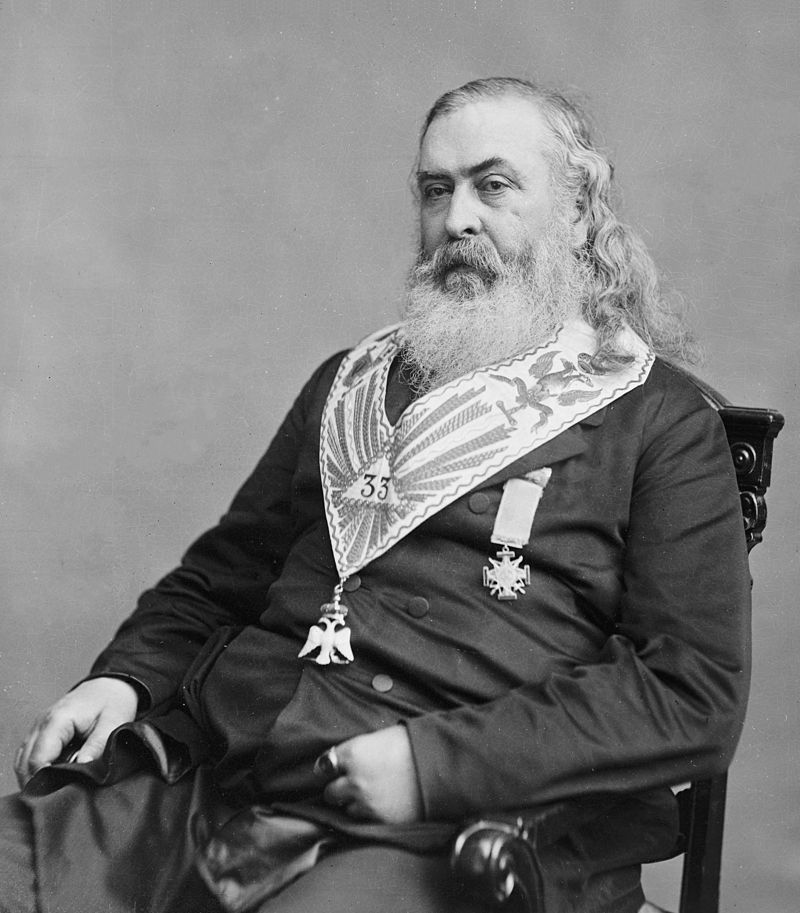
Albert Pike was a 19th-c. American Confederate general and lawyer who is best remembered for having served as Sovereign Grand Commander of the Scottish Rite of Freemasonry.
Born on the East coast, in Boston, Massachusetts, he spent considerable time in Arkansas – both before and after it was admitted into the United States.
Pike’s politics were a complicated amalgam. On the one hand, he advocated for Native Americans (then referred to as American Indians). On the other hand, he was known to have held anti-Catholic and pro-slavery views28 for much of his life.29
Among Pike’s primary masonic objectives was the reconfiguration of various “rituals” used by the fraternal order for initiatory and other purposes.
In general terms, “masonic ritual” refers to the particulars – including, actions, symbols, and words – pertaining to these ceremonies.
Similarly to John Dee, Pike had an expansive library on esoterica and the occult. Much of this collection was reportedly amassed in order for him to discharge his task of re-imagining freemasonry’s allegorical, historical, and spiritual framework.
The result of this highly influential – and admittedly monumental – effort (or, at least, Pike’s notes regarding his investigations) was the somewhat tedious tome, Morals and Dogma of the Ancient and Accepted Scottish Rite of Freemasonry (Charleston, S.C.: n.p.), first published in 1871.
During the course of his investigations, Pike surveyed – and arguably attempted to harmonize – “…the philosophies of the Gnostics, the Hebrews, the Alexandrians, the Druids, …the Essenes, …[and] the mysteries of Egypt, Persia, Greece, and India…”.30 – Quite a hefty undertaking.
His book became so important – at least in the Scottish Rite – that anti-Masons (among others) frequently refer to it as the “Bible of Freemasonry” – though practitioners of the “Craft” may usually be replied upon to disclaim this lofty designation.
Still, it is undoubtedly Pike’s magnum opus, and it would exercise some influence over Manly P. Hall, who would become one of the foremost Masonic theorists in the 20th century. According to Obadiah Harris,31 former director of Hall’s Philosophical Research Society in Los Angeles, no less a figure than President Franklin D. Roosevelt – himself a Freemason – was aware of Hall’s work and so, by extension, was influenced by Albert Pike.
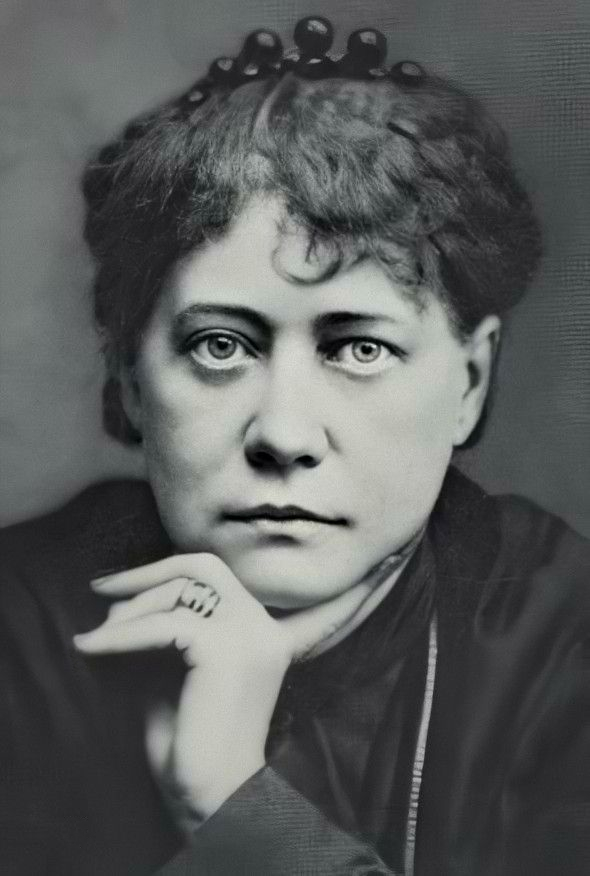
Helena Petrovna Blavatsky32 was a Russian/Ukrainian-born esoteric and writer who co-founded the Theosophical Society.33
A key aspect of Blavatsky’s system is its Eastern-mystical flavor.
To her, the kind of Renaissance Kabbalistic Neoplatonism canvassed earlier when discussing Agrippa had not gone quite far enough in trying to excavate and explicate what (she believed) was an ancient wisdom tradition that had once existed all over the earth.
To the end of articulating such a Secret Doctrine – the title of her 1888 multi-volume book – and managing a “Synthesis” of all “Science, Religion and Philosophy,” Blavatsky turned her eyes Eastward and borrowed numerous teachings from the religions of Buddhism Hinduism.34
Her first attempt at articulating her amalgamated Theosophy (which word, of course, means the “wisdom of God”) was in her book Isis Unveiled,35 complete with a subtitle claiming that her system was A Master-Key to the Mysteries of Ancient and Modern Science and Theology.36
According to Blavatsky, a hidden group of adepts – sometimes referred to as “Ascended Masters” or “Mahatmas” – are custodians of this arcana and steer humankind from behind the scenes.37
She claimed personal acquaintance with several of these entities and later dropped two curious names: “Kuthumi” and “Morya,” stating that these entities resided in or near Himalayan Tibet.
According to historian Nicholas Goodrick-Clarke, Blavatsky’s influence extends both to the Occident and to the Orient.
For example, “…[Mohandas] Gandhi and [Jawaharlal] Nehru…” – both figures in the Indian independence movement – “…were drawn to Theosophy to rediscover their own religious and philosophical heritage.”38
Goodrick-Clarke goes on to say: “In the West, Theosophy was perhaps the single most important factor in the modern occult revival.”39
Blavatsky repackaged the notion of “…Hermetic …correspondences between the macrocosm and microcosm” in contemporary lingo.40 For example, she arranged her spiritual principles on an evolutionary framework, aligning Theosophy with prevailing anthropological, biological, and cosmological scientific language.
She maintained that our “individuality” will “…[pass] through all forms of existence …until we achieve complete union with spirit” – the One, Absolute, Monad, etc.41
Relatedly, Theosophy appears to have a cyclical view of history. Furthermore, at least as communicated by present-day adherents, Blavatsky’s schema teaches a universal “oneness” of all reality in what is probably best described as a form of pantheism – or, the belief that everything is divine.
Additionally, and in line with her syncretism, Blavatsky was committed to the now-pervasive idea that all religions point – to greater or lesser degrees – to a single body of truth.
Her influence can further be seen in the fact that distinctively Buddhist and Hindu religious concepts (which Blavatsky held in high regard) have gained wide acceptance outside of India.
For instance: “Several polls carried out in North America and Europe show that the professed belief in reincarnation is widespread. Roughly twenty percent of the interviewees …state that they have wholly or partly adopted a belief in reincarnation.”42 And this was over fifteen years ago!
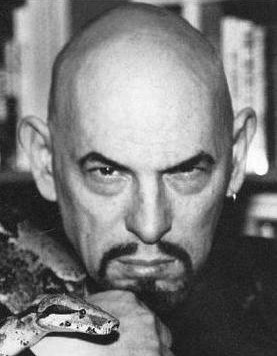
5. Anton LaVey
Source: By http://www.unexplainedstuff.com/Religious-Phenomena/Anton-LaVey-s-First-Church-of-Satan.html, Fair use, https://en.wikipedia.org/w/index.php?curid=20033361
Born Howard Stanton Levey, the man who would become known as Anton Szandor LaVey is best remembered for founding the Church of Satan in San Francisco, California on April 30, 1966 – which date is regarded as the “Satanic holiday” Walpurgisnacht.
LaVey is a difficult character to get a fix on. More than anything, he seemed to be a performer or showman.
LaVey claimed to have been cast in an uncredited role43 as Satan for the sex scene in Roman Polanski’s demonic horror classic, Rosemary’s Baby.44
Although released in 1968, the film was set during the end of 1965 and the beginning of 1966, which latter year LaVey had declared the inaugural year for the “Age of Satan.”
LaVey advanced his points of view in several books, including The Satanic Bible in 1969,45The Compleat Witch in 197146 (which was retitled The Satanic Witch and published by Adam Parfrey in 198947), and The Satanic Rituals in 1972.48
At times, his brand of Satanism appears close to endorsing the notion that the “Devil” is to be understood as some hidden enlightening, progressive “force.” Though, representatives are quick to disclaim any belief in any sort of “supernaturalism” – including belief in God or the Devil as personal entities.49
At other times, however, one gets the impression that talk about Satan was merely a colorful way of expressing a Do-Your-Own-Thing ethos, in the pattern of Francois Rabelais and Aleister Crowley that we’ll discuss further in a few minutes.
Alternatively, a person might get the impression that some of LaVey’s words and actions were merely intended to lampoon or parody religious belief – particularly the convictions of Catholic-Christians.
In this spirit of mocking jest, LaVey’s writings could be viewed as an extension of the kind of profanity on display in the 12th-c. Carmina Burana liturgical satires or, later, the bawdy and debauched tomfoolery associated with 18th-c. English government minister Sir Francis Dashwood’s Hell-Fire Club.
The Hell-Fire Club was a diabolically themed gentleman’s club that counted among its members many British statesmen and even, reportedly, American Founding Father Benjamin Franklin.
In the 20th century, LaVey’s Satanic church would also attract celebrities – among whom were African-American entertainer and “Rat Pack” member, Sammy Davis, Jr., as well as actress and sexpot Jayne Mansfield.
In any case, and for its part, the current church disclaims illegal or otherwise nefarious goals, stating: “Let us …look at contemporary Satanism for what it really is: a brutal religion of elitism and social Darwinism that seeks to re-establish the reign of the able over the idiotic, of swift justice over injustice, and for a wholesale rejection of egalitarianism as a myth that has crippled the advancement of the human species for the last two thousand years.”50
LaVeyan Satanism may be understood as concentrating upon – and exulting – the individual and his or her will. In this way, it may be seen as an outgrowth and modification of the philosophies of thinkers such as Friedrich Nietzsche’s “will to power,”51 Arthur Schopenhauer’s Wille,52 Ayn Rand’s “Objectivism,”53 and Aleister Crowley’s “Thelema.”54
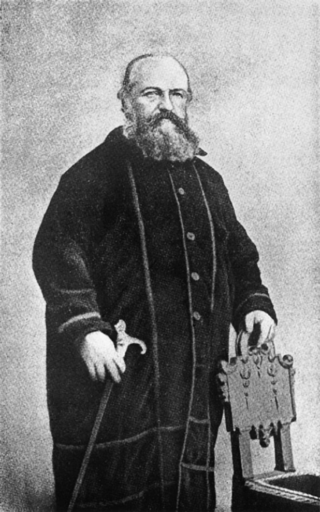
However, another of LaVey’s influences – or, at least, another of his precursors – was the 19th-c. “magus,” Alphonse Louis Constant, more usually referred to as Éliphas Lévi – sometimes pronounced more like /ELL-i-phus LEE-vie/ by anglophones.
He had a peculiar career. For example, he started out on a path towards becoming a Roman Catholic priest, even going as far as taking some of the requisite vows. However, his partiality for Gnosticism put him at odds with church hierarchies dominated by the anti-modernist Popes Gregory XVI55 and Pius IX.56
Lévi may also have had some fairly politically subversive opinions. This is perhaps not surprising given that he lived at a time characterized by the rise of political liberalism.
That he was viewed as something of a “radical” is evidenced by his imprisonment shortly after the publication of his La bible de la liberté (“The Bible of Liberty”).57
Lévi is sometimes said to have been influenced by socialism, perhaps somewhere in between the “New Christianity” of Henri de Saint-Simon and the “Utopianism” of Charles Fourier.
American-born esoteric writer Arthur Edward Waite, one of the preëminent occultists of the late 19th and early 20th centuries, translated and condensed some of Lévi’s system.
Many of these references are still widely available in reprint editions – including Waite’s volume The Mysteries of Magic: A Digest of the Writings of Eliphas Lévi published in London by George Redway in 1886.
Lévi picked up on several, preëxisting undercurrents.
For one thing, his magical system depends heavily on an alleged grimoire known as the “Greater Key of Solomon” – referring to the biblical, Israelite monarch who, according to legend, had knowledge of how to command demons.
Lévi explains the potency of magic in terms of “imagination” and “will” – both concepts traceable to Medieval Scholasticism and found, in modified form, in Renaissance occultism.58
Cosmologically, he latches onto the alchemical-Hermetic notion of microcosmic/macrocosmic “correspondences” – a constellation of ideas also found in the Kabbalah.
Lévi seems to have been influenced by a wide range of Jewish-influenced Christian and pseudo-Christian mystics going back to the 13th-c. Majorcan thinker Ramon Lull and extending through to 18th-c. Swedish philosopher Emmanuel Swedenborg and 18th-19th-c. French composer Antoine Fabre d’Olivet (an-TWAN FABRI-dole-ee-vay).
Moreover, he appeared to want to repackage and syncretize the “herbal magic” of Paracelsus – as it had passed through Rosicrucianism – with a modernized version of Agrippa’s “ceremonial magic,” filtered through the 18th-c. English occultist Francis Barrett, particularly in his book, The Magus, or Celestial Intelligencer.59
But Lévi’s real significance arguably lies in the fact that he was the “first to connect the Cabala with fortunetelling Tarot cards.”60
From this insight, Lévi extrapolated a complex series of linkages between the letters of the Hebrew alphabet and the Tarot “Trumps.” This picks up the linguistic note sounded by John Dee, and others, and is later echoed by Arthur Edward Waite in his famed Rider-Waite Tarot deck, about which I will have more to say in a subsequent video.
On the literary front, among those who “admired” Lévi was Victorian author and politician Lord Edward Bulwer-Lytton.61 Although largely unknown today, Bulwer-Lytton originated several still-used phrases such as “it was a dark and stormy night,” which was the opening line of his 1830 novel, Paul Clifford.62
Lévi’s primary influence was exercised upon subsequent occultists such as Madame Blavatsky, the Golden Dawn, and the Masonic philosopher Manly Palmer Hall.
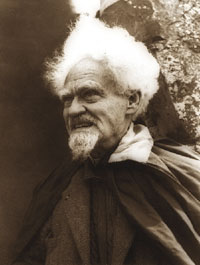
3. Gerald Gardner
Source: By Published in a wide variety of sources, both online and in print., Fair use, https://en.wikipedia.org/w/index.php?curid=36288734
The late-19th to early 20th-c. occultist born Gerald Brosseau Gardner was to exercise a tremendous impact on the reintroduction of “witchcraft” – first to the United Kingdom and, later, to the rest of the world.
Although Gardner was born into a fairly well-to-do family that had become prosperous in the lumber business, he appears to have been cast aside and left in the care of a somewhat aloof nursemaid.
After a time, Gardner’s nanny married a man who owned a tea plantation in Sri Lanka, where she moved taking young Gerald with her.
Gardner apparently learned the business and was successful enough at it to have the luxury of extensive travel and, eventually, an early retirement.
While in the east, Gardner familiarized himself Malaysian native religions.
And, although he was never formally educated, over the course of his life he read numerous esoteric-themed books including Charles Godfrey Leland’s folklore collection Aradia; or, The Gospel of the Witches,63 Florence Marryat’s 1891 Spiritualist classic There Is No Death64 and Margaret Murray’s seminal, though highly eccentric and heterodox, anthropological treatise The Witch-Cult in Western Europe.65
Additionally, at one time or other, he appears to have been a member of various secret societies, including Freemasonry and Rosicrucianism.
The consensus scholarly opinion has it that these resources, along with his own experiences with diverse traditions (from Buddhist and other ceremonial-magic practices on the one hand to folk herbalism and paranormal speculations on the other), coalesced into what became known as Wicca.
However, according to his own account, Gardner had been initiated into an an ancient Anglo paganism by a mysterious witch he referred to as “Old Dorothy.”
Regardless of its source, Gardner popularized Wicca through numerous avenues, for example, by writing about it in several books such as High Magic’s Aid 66 (published pseudonymously in 1949, two years before the repeal of the Britain’s Witchcraft and Vagrancy Acts that would have made his practices illegal), as well as Witchcraft Today67 in 1954 and The Meaning of Witchcraft68 in 1959.
Beyond this, the so-called Book of Shadows – originally Gardner’s working notes – is now also widely available and is held in high regard by some Wiccans.
If recent headlines can be believed,69 Gardnerian Wicca itself is among the fastest-growing religions in America and Great Britain, and, in any case, it has helped to give motivate a resurgence of neo-paganism more generally – a broad designation ranging many associations and movements that, besides Wicca, include Druidism, Heathenry, and Odinism.
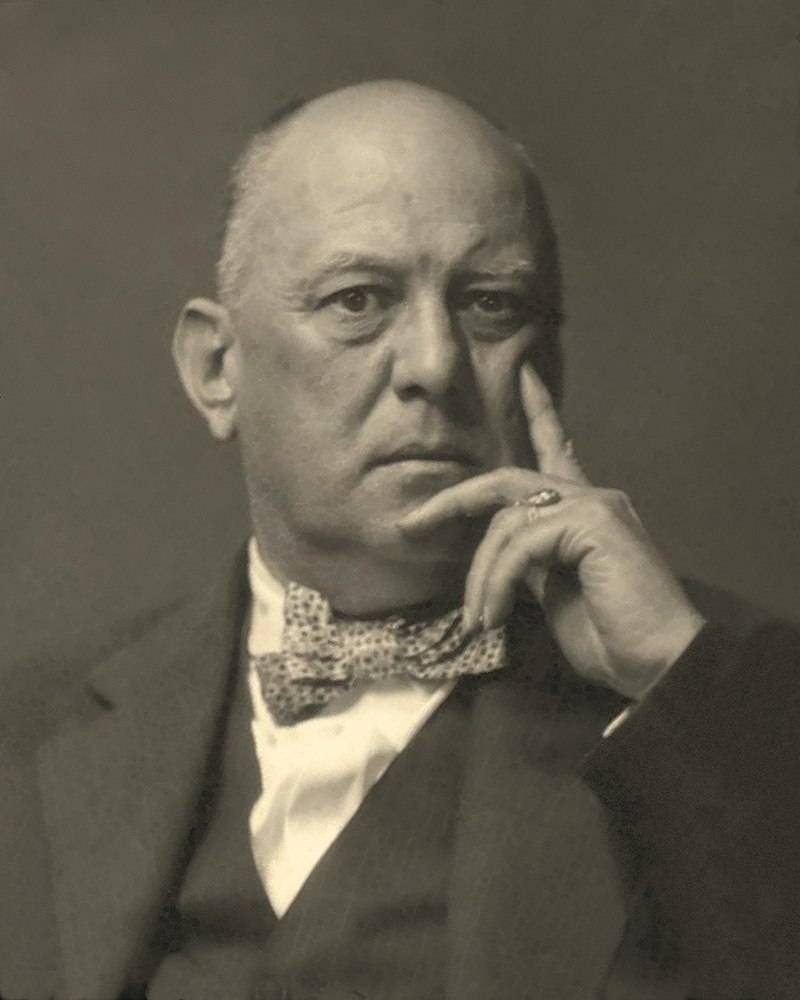
Among Gardner’s influences – and one of the larger-than-life figures of the occult, generally – was Edward Alexander “Aleister” Crowley.
Born around the middle of the class-conscious Victorian Era, Crowley was initially given a strict Christian upbringing under the auspices of the Plymouth Brethren. The Brethren were an eschatologically obsessed Protestant group that included ministers, like John Nelson Darby, who had split from Anglicanism.70
For Crowley, this apocalyptic environment – combined, when he was only eleven years old, with the death of his father – seems to have galvanized him to embrace the persona of θηρίον (Thērion, the “Beast”) for – what seems in his mind to have been – an epic lifelong battle against Christianity.
He would come (no pun intended) to see this effort as being bound up with sex magic and it would involve him with numerous wives, mistresses, and other sexual partners – both female71 as well male.72
In a seminal instance of such “magick” (which word Crowley spelled with a final “k”), and revealing something of Crowley’s appreciation of Lévi, he and Victor Neuberg (a young Trinity-College graduate, poet, and student of the occult) supposedly crossed some sort of Kabbalistic “Abyss.”
According to Crowley’s (possibly embellished) account, the duo encountered a destructive “Guardian of the Threshold”73 named “Choronzon” – which entity had previously identified as a demon by John Dee and Edward Kelley.
Crowley, independently wealthy from a substantial trust fund, directed his money and time into accumulating occult knowledge. At various times he joined numerous secret societies, including the Freemasons, “MacGregor” Mathers’ Hermetic Order of the Golden Dawn, and Theodor Reuss’s Ordo Templi Orientis (or the “Order of the Temple of the East”), abbreviated “O.T.O.”74
He even created his own order, typically designated only by the characters “A∴A∴.” Numerous possible interpretations of this name have been put forward, with the usual (though disputed) suggestion being that it stands for Argentium Astrum, meaning “Silver Star.”75
But, Crowley expressed dissatisfaction with many of these associations – and frequently disparaged fellow members as mere poseurs.
Apparently determined to excavate genuine magical secrets for himself, he embarked on a series of reportedly dangerous rituals in dynamic locations. One such, was the allegedly black-magical Rite of Abramelin that he undertook at Boleskine House on the shore of Loch Ness in Scotland.76
Or again, in Egypt, Crowley alleged that, in 1904, while on his honeymoon with first wife Rose Kelly, he channeled a document known as The Book of the Law77 from an entity named “Aiwass,” during a ritual referred to as the “Cairo Working.”
In Crowley’s view, The Book of the Law was to serve as a foundation for a new religious and social order, built – in part – atop the maxim “Do what thou wilt shall be the whole of the law.”
Crowley attempted to model his ideal in Cefalù, on the Island of Sicily.
He styled this Italian-based occultic commune, the “Abbey of Thelema,” after a fictional predecessor78 featured in 16th-c. humanist-monk François Rabelais’s satirical and vulgar Gargantua and Pantagruel novels published in the 1530s.
It was a fairly short-lived experiment, however, as Crowley and his devotees were expelled by Benito Mussolini in 1923 following the death of young Oxford graduate Frederick “Raoul” Loveday, whose widow later reported that her husband had taken ill after drinking animal blood during a black-magical ceremony.
Regardless of the account’s veracity, it helped to cement Crowley’s reputation as the “wickedest man in the world” – as one newspaper headline once stated.
This notoriety was only furthered by his own writings, such as the Diary of a Drug Fiend, published in 1922,79 and The Confessions of Aleister Crowley, posthumously published in a full edition in 1969.80
Crowley was an inspiration to many of the pop-cultural icons promoting the “sex, drugs, and rock&roll” atmosphere of the 1960s, including John Lennon (who was apparently instrumental in seeing that Crowley’s image was featured on the Beatles’ 8th album, Sgt. Pepper’s Lonely Hearts Club Band), Led Zeppelin’s Jimmy Page (who later acquired Boleskine House), and – for a time – the members of the Rolling Stones (who had been introduced to Crowley via Lucifer Rising director, Kenneth Anger).
Runners up…
Of course, occultism owes much to numerous others. Attempting to list all the relevant names would be an exercise in futility. Suffice it to say that, apart from other actors already mentioned in passing, other characters such as Francis Bacon, the Biblical characters like Enoch and King Solomon, alchemical figures like Nicolas Flamel and Paracelsus, Neo-Platonists Iamblichus and Plotinus, and curious personalities like Hermes Trismegistus and Anton Mesmer – whether historical or fictional – will appear in forthcoming videos. But, for now…
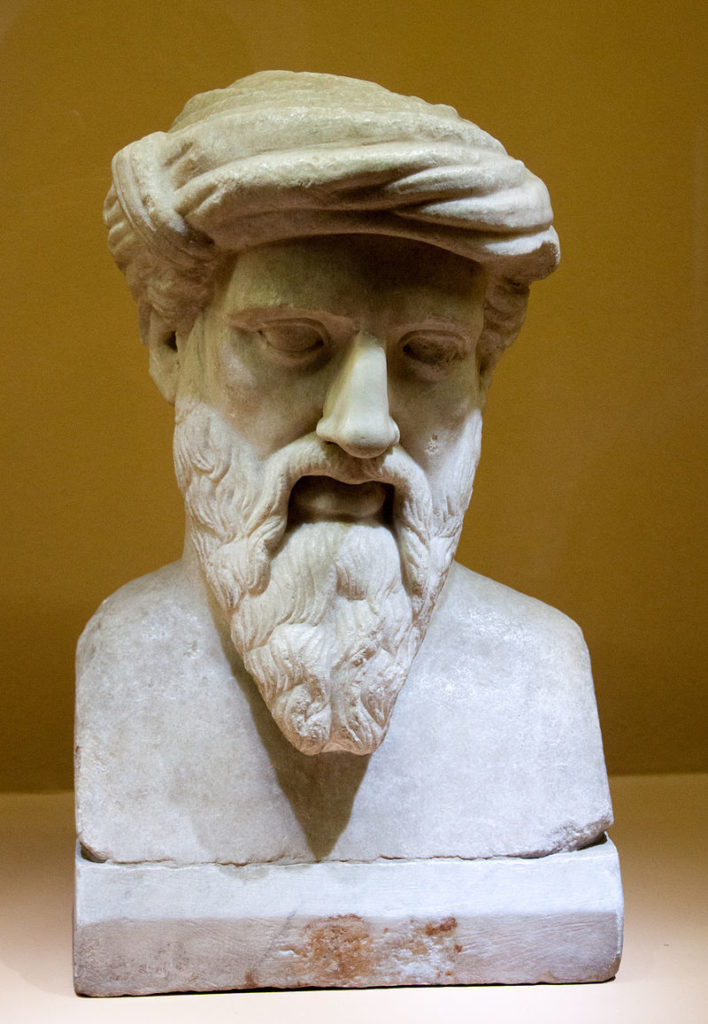
Pythagoras was a truly pioneering Greek thinker who radically impacted the development of numerous important disciplines including cosmology, mathematics, and philosophy – which word, meaning the “love of wisdom,” he is said to have coined.
Blavatsky – true to her form – asserts that “…Pythagoras learned from the Egyptian hierophants” and “Hindu sages,” but also holds that he was the fountainhead of a philosophy that was subsequently delivered through Socrates and Plato.81
Pythagoras dramatically affected the course of subsequent Western occultism.
He was born on the Greek island of Samos in the Aegean Sea about the year 570 B.C.E. His life after that is something of a question mark.
Chroniclers say that he traveled widely and was initiated into numerous “mystery religions” and wisdom traditions.
Curious stories abound with respect to Pythagoras. He supposedly had magical powers and “a golden thigh; …he had the gift of prophecy; and he could be at different places at the same time. Like Orpheus, he had power over animals… All these characteristics indicate that Pythagoras was no ordinary human being; he was a ‘divine man,’ … or shaman…”.82
Pythagoras eventually founded his own commune in a what is now the Italian city of Crotone.
There, Pythagoras taught his students the secrets he had learned, creating an esoteric body of thought called “Pythagoreanism.”
Evidently, he did nothing to dispel the idea that he was a “miracle worker” and his awe-inspired followers submitted to an almost cult-like system of community regulations and rules – a system in which only a select group would be taught his entire philosophy.
Pythagoreanism seems to have involved numerous, original concepts.
Arguably, three of the most important were a belief in the reincarnation of souls, commitment to the notion that the visible world of objects issued or “emanated” from some ultimate metaphysical reality, and an assertion of the fundamental existence – and magical power – of numbers.
These ideas dovetailed in interesting ways, prompting Pythagoras have discovered noteworthy geometrical and numerical relationships, such as that between the hypotenuse and sides of a right triangle – an insight still conveyed to school children as the Pythagorean Theorem, and given towering mystical and symbolical proportions in Freemasonry.
Beyond contributions to abstract thinking, some observers look to Pythagoras as a precursor to modern science. For instance, he taught that the universe was a rationally ordered cosmos that could be understood mathematically.
But Pythagoreanism also helped shape such occult traditions as alchemy, Gnosticism, Neo-Platonism, Paracelsianism, Rosicrucianism and, much later, the Theosophy and the New-Age Movement.
Aleister Crowley even wrote that “…the Qabalists who invented the Tree of Life were [probably] inspired by Pythagoras, or that both he and they derived their knowledge from a common source in higher antiquity.”83
This link between Kabbalism – and Merkavah mysticism – and Pythagoras is also asserted by Lévi (as translated by Waite), who adds the flourish that this ancient sage is also connected to the mysterious number “666” mentioned in Revelation 13:18.84
Finally, would you believe that the Pythagoreans may also have anticipated modern-day Vegans and others by embracing some sort of ancient vegetarianism? Some sources suggest that this was actually the case – either that or Pythagoras at least seems to have adopted and required his followers to observe dietary restrictions, not unlike those associated with Judaism (though, for different reasons).
With such a remarkable impact, it’s no wonder present-day Masons refer to Pythagoras as their “ancient friend and Brother.”
To paraphrase the wander maker, Ollivander, in J. K. Rowling’s Harry Potter franchise: Some of these esoterics and occultists “…did great things. Terrible? Yes. But… great!”
In your opinion, did I miss anyone? Who would you have added or removed? What’s your own top-10 list?
There are plenty more figures that I could have been included. I intend to remedy some deficits with future lists.
Hope to see you next time!
Notes:
1See Douglas Harper, “Occult,” Online Etymology Dictionary, n.d., <https://www.etymonline.com/word/occult>.
2See, e.g., Stephen Klimczuk and Gerald Warner, Secret Places, Hidden Sanctuaries: Uncovering Mysterious Sites, Symbols, and Societies, London & New York: Sterling Ethos, 2009, pp. 81ff.
3According to the celebrated 18th-19th-c. German playwright Johann Wolfgang von Goethe, Cagliostro may actually have been Jewish. If true, this would provide some context for his reputed knowledge of Hebrew tradition. Goethe, Italian Journey, 1786-1788, London: Penguin, 1970, p. 249; online at: <https://books.google.com/books?id=ioXNoJa6qNsC&pg=PA249>.
4See Jim Brandon, “Sirius Rising,” audio recording, ca. 1970s.
6Some of the Western exposure to Eastern/Greek ideas came via the Council of Florence (convoked to discuss the debate between Conciliarists and Papalists and the Great Schism), which was attended by hundreds of delegates, including “Plethon” (Gemistus Pletho). Plethon was noteworthy because he rejected Christianity in favor or a Neo-Platonically tinged version of paganism that was also reportedly a blend of angelology, astrology, and mysticism, seasoned with elements of Stoicism (presumably, some sort of asceticism) as well as Zoroastrianism. This combinatorial exercise will be echoed and repeated by many of the figures appearing on this list.
7This framework had been devised by the Hellenistic philosopher Plotinus and his more magically inclined succssor, Iamblichus.
8Together, Latin, Greek, and Hebrew were sometimes designated the “Three Languages.”
9Frances Yates, The Occult Philosophy in the Elizabethan Age, London: Routledge, 1999, p. 97.
10First under King Henry VIII and Henry’s, son Edward VI (and John Dudley, Duke of Northumberland, acting as regent), and then under Queens Mary and Elizabeth I.
11Believe it or not, this was once a respectable position, and it was held by numerous individuals such as famed astronomer Tycho Brahe (for Danish King Frederick II); Hermeticist Giordano Bruno (e.g., for the House of Mocenigo, which ultimately produced Bruno’s accuser, Giovanni Zuane Mocenigo); mathematician Gerolamo Cardano (for English King Edward VI); formulator of the “laws of planetary motion,” Johannes Kepler (for Holy Roman Emperor Rudolf II); alleged French seer Nostradamus (for Florentine noblewoman and Queen Consort to French King Henry II, Catherine de Medici); and even scientific hero Galileo (for Tuscan Duke Cosimo II de’Medici).
12Today, Dee’s journal is known as De Heptarchia Mystica (or, “On the Mystical Rule of the Seven Planets,” ca. 1582).
13Since, obsidian is a black, volanic stone, it’s interesting (to this writer) that Charlie Brooker’s Netflix-original show has the title Black Mirror.
17In what was once metaphorically referred to by 20th -c. mystic and psychedelic advocate Terence McKenna as an occultic analog to the 1st -c. Christian-missionary journeys undertaken by St. Paul. See Terence McKenna, The Alchemical Dream: Rebirth of the Great Work, Sheldon Rochlin, ed., DVD, Sacred Mysteries Productions; Mystic Fire Productions; 2008.
18Including the “fruit portraiture” of Giuseppe Acrimboldo.
19Ostensibly in an effort to unlock the secrets of the “Philosopher’s Stone” and perhaps to create gold.
20Which had been a respectable European pursuit at least since Ptolemy’s pioneering Tetrabiblos. Though, undoubtedly, the notions go back to Egypt – if not earlier.
27Russell Adams, Jr., et al., eds., Mysteries of the Unknown: Ancient Wisdom and Secret Sects, Alexandria, Virg.: Time-Life Books, 1989, p. 153.
28It has even been alleged that Pike had something to do with – or, perhaps, held membership or leadership in – the infamous Ku Klux Klan. However, evidence for this appears scant and in in any case, the Klan is more typically associated with Pike’s Confederate colleague, Nathan Bedford Forrest, who indisputably served as the organization’s first “Grand Wizard.”
29Recent attempts have been made to rehabilitate Pike’s image vis-à-vis his “racism.” One such effort appears under the headline “Albert Pike did not found the Ku Klux Klan,” and was published on the website of the Grand Lodge of British Columbia and Yukon (Nov. 26, 2012, <https://freemasonry.bcy.ca/anti-masonry/kkk.html>). The reference is prominent enough to receive a citation in Pike’s entry (“Albert Pike,” Sept. 9, 2021, <https://en.wikipedia.org/wiki/Albert_Pike>) for the popular internet-based encyclopedia Wikipedia.
In both resources (op. cit.), Pike is excerpted (see full citation for the original source, infra.) to the following effect: “I am not one of those who believe slavery a blessing. I know it is an evil, as great cities are an evil…”. Pike proceeds to compare the evil of slavery to evils of wage labor and military service – presumably because both of which, like slavery, undermine “free-will and individuality”.
However, this opinion did not stop Pike from participating in the institution of slavery. He also wrote, in the sentence preceeding the widely quoted statement (no less): “I have owned only such slaves as I needed for household servants.” (Fred William Allsopp, Albert Pike: A Biography, Little Rock, Ark.: Parke-Harper, 1928, p. 181.)
Thus, even the freemasonic website admits that Pike’s “racism …[is]nothing to be proud of”. (“Albert Pike did not found the Ku Klux Klan,” loc. cit.).
30Robert Lipscomb Duncan, Reluctant General: The Life and Times of Albert Pike, N.Y.: E.P. Dutton & Co., 1961, p. 155.
31Christian Pinto, “Eye of the Phoenix: Secrets of the Dollar Bill,” Secret Mysteries of America’s Beginnings: Volume 3, DVD, N.p.: Antiquities Research Films, 2009.
33Along with Americans Colonel Henry Steel Olcott and William Judge.
34This conjunction of East and West was part of the Zeitgeist, apparently, as one of the first “interfaith” conventions – called the “World’s Parliament of Religions” – convened, under the auspices of Chicago’s Columbian Exposition, on September 11, 1893.
35London: Theosophical Publ. House,; New York: J.W. Bouton,1877;
36Blavatsky was accused of plagiarism, particularly by William Emmette Coleman. Coleman was a 19th-c. academic specializing in studies of the Far East and the Near East, then referred to as “Orientalism.” He was also an avid spiritualist, himself. So, prima facie, his criticisms do not seem to have been ideologically motivated. See William Emmette Coleman, “ The Sources of Madame Blavatsky’s Writings,” Vsevolod Sergyeevich Solovyoff, A Modern Priestess of Isis, London: Longmans, Green, & Co., 1895, Appendix C, pp. 353-366; reproduced online at: Blavatsky Study Center, 2004, <https://www.blavatskyarchives.com/colemansources1895.htm>.
37Incidentally, Hermetic-Order-of-the-Golden-Dawn head honcho, Samuel Liddell “MacGregor” Mathers, also maintained that he was in contact with a coterie of “Secret Chiefs” who helped him steer his organization and draft its rituals.
38Nicholas Goodrick-Clarke, Helena Blavatsky, Berkeley, Cal.: North Atlantic Books, 2004, p. 17.
41See George Lachman, Madame Blavatsky, New York: Penguin, 2012, pp. 254-255.
42“A Case Study: Reincarnation,” Claiming Knowledge: Strategies of Epistemology from Theosophy to the New Age, Leiden, The Netherlands: Brill, 2004, p. 455; available online at: <https://brill.com/view/book/9789047403371/BP000008.xml>.
43Whether this story is true or not, I cannot say. But it is accepted – if only prima facie – by some scholars. See, e.g., Bengt Ankarloo, Stuart Clark, eds., Witchcraft and Magic in Europe: The Twentieth Century, Philadelphia: Univ. of Penn. Press, 1999, p. 96 & Susan Greenwood, The Encyclopedia of Magic & Witchcraft, London: Hermes, 2004, p. 239.
49See “Information for Prison Chaplains,” Church of Satan [website], n.d., <https://www.churchofsatan.com/info-for-chaplains/>.
50Peter Gilmore, “Satanism: The Feared Religion,” Church of Satan [website], n.d. [orig. 1992], <https://www.churchofsatan.com/satanism-the-feared-religion/>.
51The phrase owes to Nietzsche (see his aphorism “This world is the Will to Power—and nothing else!” in paragraph 1067 of his Nachlass, loc. cit., infra.), even though the title of the posthumously published Der Wille zur Macht (Leipzig: Naumann, 1901) was the brainchild of his sister, Elisabeth Förster-Nietzsche.
52Die Welt als Wille und Vorstellung (“The World as Will and Representation”), Leipzig: Brodhaus, 1819.
53As articulated, for instance, in her novels The Fountainhead (Indianapolis, Ind.: Bobbs Merrill, 1943) and Atlas Shrugged (New York: Random House, 1957).
54The beginnings of which are found in Liber AL vel Legis (“The Book of the Law”) which Crowley attributed to a spirit or demon called “Aiwass” and which Crowley privately published in 1909. For a bit more, see the section on Crowley, below.
55See his encyclical Mirari vos (on liberalism and religious indifferentism, 1832).
56See Quanta cura (“Condemning Current Errors,” 1864).
57Alphonse-Louis Constant, Paris: Le Gallois, 1841.
58For example, according to him: “Imagination …is like the soul’s eye; …it is the glass of visions and the apparatus of magical life… [I]t is the imagination which exalts the will…”. Transcendental Magic: Its Doctrine and Ritual [orig. Dogme et Rituel de la Haute Magie], Arthur Edward Waite, ed., transl., Chicago: Occult Publ. House, 1910, pp. 34-35; online at: <https://books.google.com/books?id=XI_kwB0uW10C&pg=PA34>.
60Mysteries of the Unknown: Ancient Wisdom and Secret Sects, Arlington, Virg.: Time-Life, 1989, p. 66.
61Leslie George Mitchell, Bulwer-Lytton: The Rise and Fall of a Victorian Man of Letters, London: Hambledon and London, 2003, p. 142.
62London: John Dicks. More interestingly, the French magus may even have inspired – or informed – Bulwer-Lytton’s The Haunted and the Haunters (N.p.: n.p., 1857 / 1859) and A Strange Story (London: S. Low, Son & Co., 1862), at least, according to uncited information on an occultically themed website. See “Levi, Eliphas,” ca. 2003, <https://occult-world.com/levi-eliphas/>. Incidentally, the publication particulars are a bit difficult to discover through the usual channels (e.g., via WorldCat). It seems that the two publications are sometimes packaged together. E.g., see: A Strange Story And The Haunted & the Haunters (London: G. Routledge and Sons, 1866); available online at: <https://books.google.com/books?id=JHIRAAAAYAAJ>.
66Scire (Gerald Brosseau Gardner), High Magic’s Aid, London: Michael Houghton, 1949.
67London: Rider, 1954. Of course, Rider was the company that published Arthur Edward Waite’s famous Tarot-card deck – now known as the Rider-Waite Tarot.
69See, e.g., N.a., “Wicca: What’s the Fascination?” CBN, n.d., <https://www1.cbn.com/books/wicca%3A-what%27s-the-fascination%3F>; “It’s a moot point, but Paganism may be the fastest growing religion in Britain,” Yorkshire Post, Oct. 31, 2013, <https://www.yorkshirepost.co.uk/news/its-moot-point-paganism-may-be-fastest-growing-religion-britain-1853590>; and Mary Jones, “’Wicca’: The Fastest Growing Belief System in the World Today,” Press Release Log, Nov. 20, 2008, <https://www.prlog.org/10144283-wicca-the-fastest-growing-belief-system-in-the-world-today.html>. Though, admittedly, other sources claim that Islam is growing quicker. Cf. “Islam: The World’s Fast-Growing Religion,” BBC, Mar. 16, 2017, <https://www.bbc.com/news/av/world-39279631>.
70Darby is an interesting character in his own right, since he – arguably more than any other person – is responsible for the popularity of so-called “Premillennial Dispensationalism,” an interpretation of the Biblical books of Daniel and Revelation maintaining that much of the apocalyptic and prophetic language describes an “end-times” reign of the “Anti-Christ.” This story line was further developed by Hal Lindsey in his 1970 best seller, The Late, Great Planet Earth, (Grand Rapids, Mich.: Zondervan.) and made into a movie based on the Left Behind series of novels written by Tim LaHaye and Jerry Jenkins (Carol Stream, Ill.: Tyndale House Publ., 1995.).
71Such as Leah Hirsig and Leila Waddell. Crowley apparently referred to these sexual partners as “Scarlet Women,” and thought they were incarnations of the Biblical “Whore of Babylon,” which he designated with the variant spelling, Babalon.
72E.g., Victor Neuburg. See, e.g., James Webb, The Occult Establishment, La Salle, Ill.: Open Court, 1991, p. 61.
73Also called the “Dweller on the Threshold,” which concept owes to the previously name Baron Bulwer-Lytton. See his Zanoni, London: G. Routledge, 1842.
74Just as Mathers is named along with co-founders William Wynn Westcott and William Robert Woodman, so too is Reuss also associated with two others: Carl Kellner and Franz Hartmann.
75Other suggestions include Arcanum Arcanorum (“Secret of Secrets”) and Argon Astron (“Silver Star” in Greek – alternatively, Asimēnio Astēri).
76According to S.L. “MacGregor” Mathers, citing his friend and fellow occultist Henri Antoine Jules-Bois; see The Book of the Sacred Magic of Abramelin the Mage, Mineola, N.Y.: Dover Occult, 1975, p. xvi.
81H. P. Blavatsky, Isis Unveiled, Vol. 1, Wheaton, Ill.: Quest Books, 1994, pp. 7, xx, and xvii.
82According to Georg Luck, Arcana Mundi: Magic and the Occult in the Greek and Roman Worlds: A Collection of Ancient Texts, Baltimore: Johns Hopkins Univ. Press, 2006, p. 42.
83Aleister Crowley, Book of Thoth, reprint ed., Boston: Weiser Books, 2004 [1944], p. 31.
84See Éliphas Lévi, transl., Arthur Edward Waite, Transcendental Magic: Its Doctrine and Ritual, New York: E.P. Dutton, 1938, p. 211.